The Indus River, The Great Sindhu
The Indus River (Sindhu in Sanskrit) is one of the longest rivers in Asia, flowing for over 2,000 kilometers from its source in Tibet to the Arabian Sea in Pakistan. The river originates near Lake Mansarovar in Tibet, at an altitude of over 17,000 feet. It flows through Ladakh, entering India near the village of Demchok, and then flows northwest through Leh and Kargil before crossing into Pakistan.
The Indus is the lifeline of Ladakh. Without it, the green fields of the Sham Valley, the orchards of Nubra, and the villages along its banks would be desert. The river provides water for irrigation, drinking, and electricity (via the Nimoo-Bazgo hydropower project). It's also sacred, the name "India" comes from the River Indus.
Key facts about the Indus in Ladakh:
- Color: Brownish, muddy, carrying silt from the Tibetan plateau.
- Season: High water in summer (June-September) from snowmelt, low water in winter.
- Notable tributaries in Ladakh: Zanskar River, Shyok River, Suru River.
- Major towns along the Indus: Leh, Nimoo, Basgo, Saspol, Alchi, Kargil (nearby).
The Zanskar River, The Wild Tributary
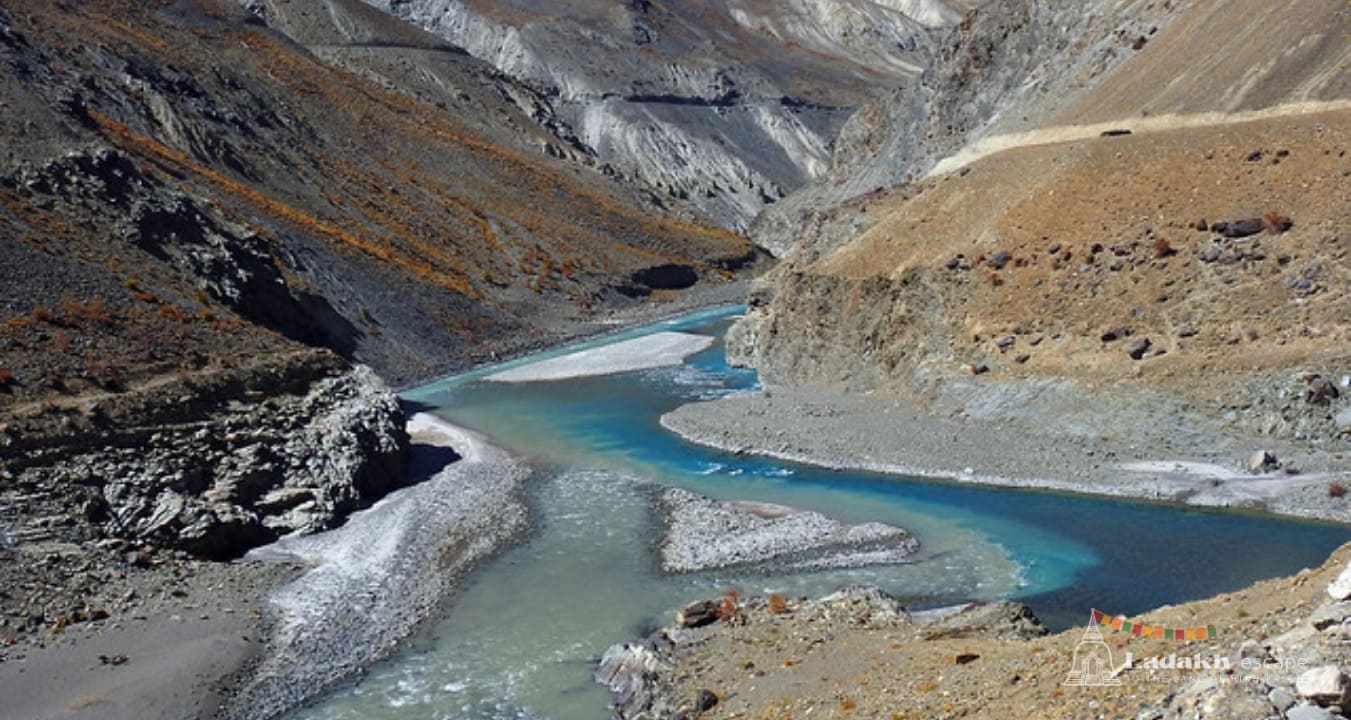
The Zanskar River is a major tributary of the Indus, originating in the Zanskar range in southeastern Ladakh. The river flows for over 400 kilometers through deep gorges, remote valleys, and some of the most dramatic landscapes in the Himalayas. It meets the Indus at Sangam Point, near the village of Nimoo.
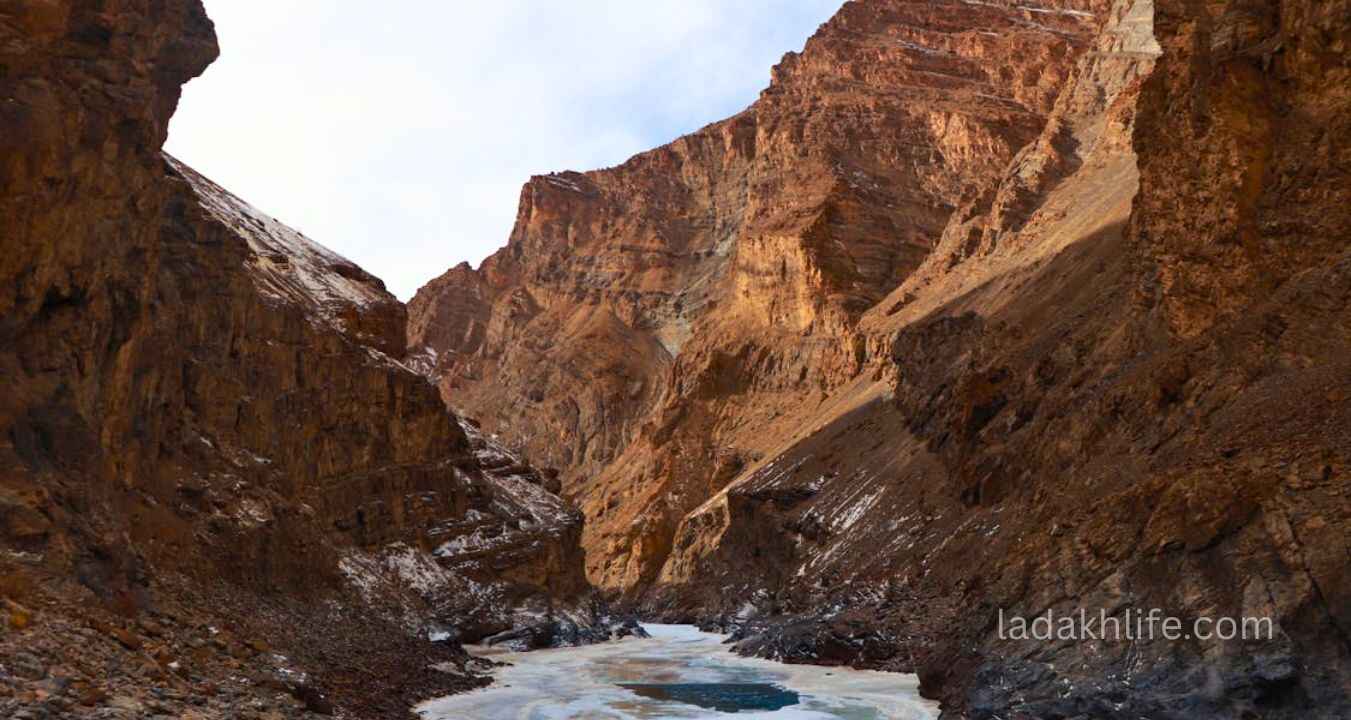
The Zanskar River is known for its turquoise-grey color, a result of glacial melt and mineral content. In summer, it's a wild, raging river, perfect for white-water rafting. In winter, it freezes solid, becoming the famous Chadar Trek, a multi-day walk on the frozen river.
Key facts about the Zanskar River:
- Color: Grey-green, turquoise-ish, clear compared to the Indus.
- Season: High water in summer (June-September), frozen in winter (January-February).
- Notable gorges: Zanskar Gorge (up to 1,500 feet deep), where the Chadar Trek takes place.
- Major towns along the Zanskar: Padum (Zanskar), Rangdum, Chilling.
The Confluence at Sangam Point, Where Two Rivers Meet
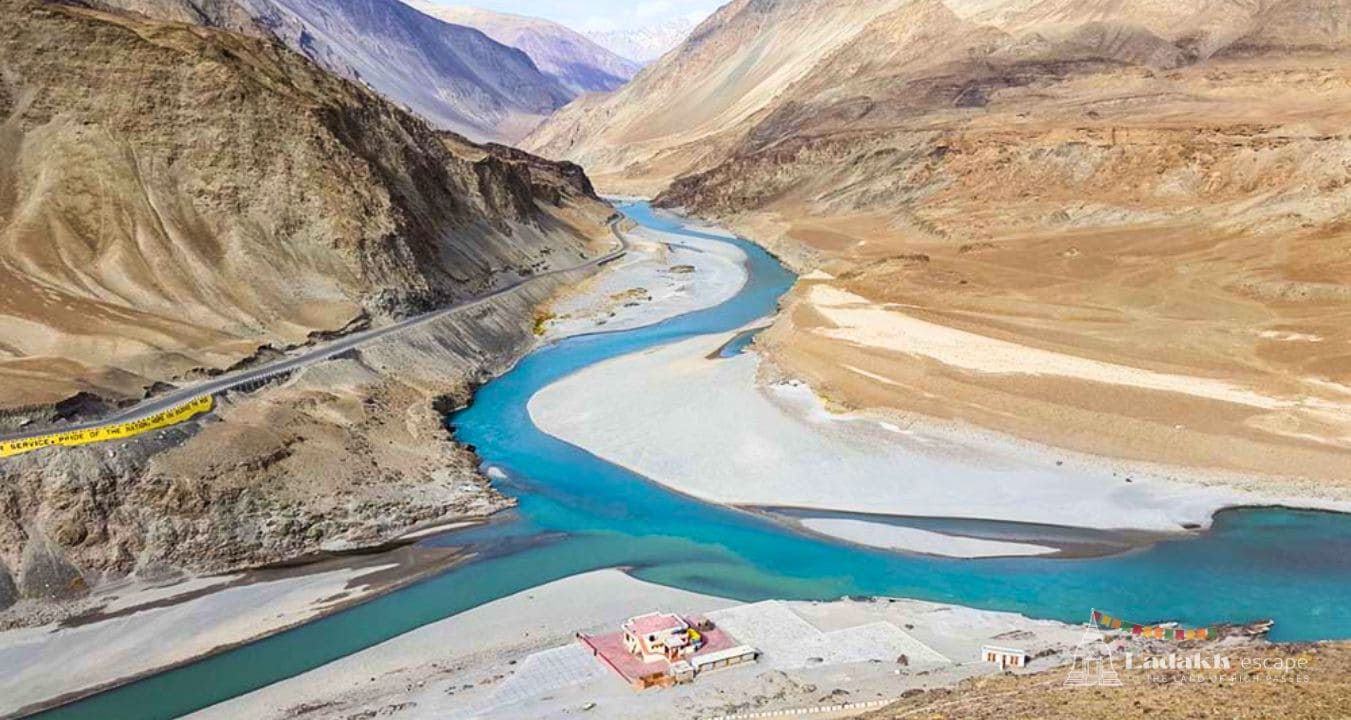
The most dramatic place to experience the Indus and Zanskar rivers is at their confluence, known as Sangam Point. Located about 35 kilometers from Leh on the Srinagar-Leh highway, near the village of Nimoo, Sangam Point is where the brown Indus meets the grey-green Zanskar. The two rivers flow side by side for a short distance, their colors distinct, before slowly merging into one.
Why Sangam Point is spectacular:
- The colors. The contrast between the brown Indus and the grey-green Zanskar is stunning, especially in the late afternoon light.
- The viewpoint. A short climb up the hill above the confluence gives you a bird's-eye view of the meeting of the waters.
- The power. Standing at the confluence, you can feel the power of the rivers, the roar, the spray, the force of millennia of geology.
For more details, check our dedicated Sangam Point guide.
River Rafting on the Indus and Zanskar
Both the Indus and Zanskar rivers offer excellent white-water rafting opportunities. The rapids range from Class II to Class III+, making them suitable for beginners and experienced rafters alike.
Rafting on the Zanskar River:
- Route: Usually from Chilling to Sangam Point (about 25 km, 2-3 hours).
- Rapids: Class II-III, exciting but not too dangerous.
- Scenery: The Zanskar Gorge is spectacular, steep cliffs, barren mountains, and the turquoise river below.
- Season: July to September (when the water is high enough).
Rafting on the Indus River:
- Route: Usually from Upshi or Nimoo to Sangam Point (10-15 km, 1-2 hours).
- Rapids: Class II-III, a bit gentler than the Zanskar.
- Scenery: Green fields, villages, and brown mountains.
- Season: July to September.
Rafting trips can be booked through adventure operators in Leh. Expect to pay ₹1,500-3,000 per person for a half-day trip. No experience necessary, guides will give you instructions. Safety gear (life jacket, helmet) is provided.
The Chadar Trek, Walking on the Frozen Zanskar
In winter, the Zanskar River transforms. Temperatures drop to -20°C or lower, and the river freezes solid, a "blanket of ice" (chadar in Hindi). This is when the famous Chadar Trek takes place.
What is the Chadar Trek?
- Duration: 4-7 days (one way).
- Distance: About 60-70 kilometers (depending on starting point).
- Season: January to February (only a short window when the ice is thick enough).
- Starting point: Chilling village (near Sangam Point).
- End point: Nerak village (in the Zanskar Valley).
The Chadar Trek is challenging, dangerous, and unforgettable. Trekkers walk on the frozen river, camp in caves, and experience temperatures as low as -30°C. It's not for beginners, you need to be well-acclimatized, physically fit, and prepared for extreme cold. But for those who do it, it's a once-in-a-lifetime adventure.
Note: The Chadar Trek is only open to organized groups with permits. Do not attempt it alone. Hire a registered trekking agency in Leh.
The Role of the Rivers in Ladakhi Life
The Indus and Zanskar rivers are not just tourist attractions. They are the lifelines of Ladakh. Without them, the green fields of the Sham Valley would be desert. Without them, the apricot orchards of Nubra would not exist. Without them, the villages along their banks would be uninhabitable.
- Irrigation: Farmers use traditional irrigation channels (called "yur" in Ladakhi) to divert water from the rivers to their fields.
- Drinking water: Many villages depend on the rivers for drinking water (though treatment is often necessary).
- Electricity: The Nimoo-Bazgo hydropower project on the Indus provides electricity to Leh and surrounding areas.
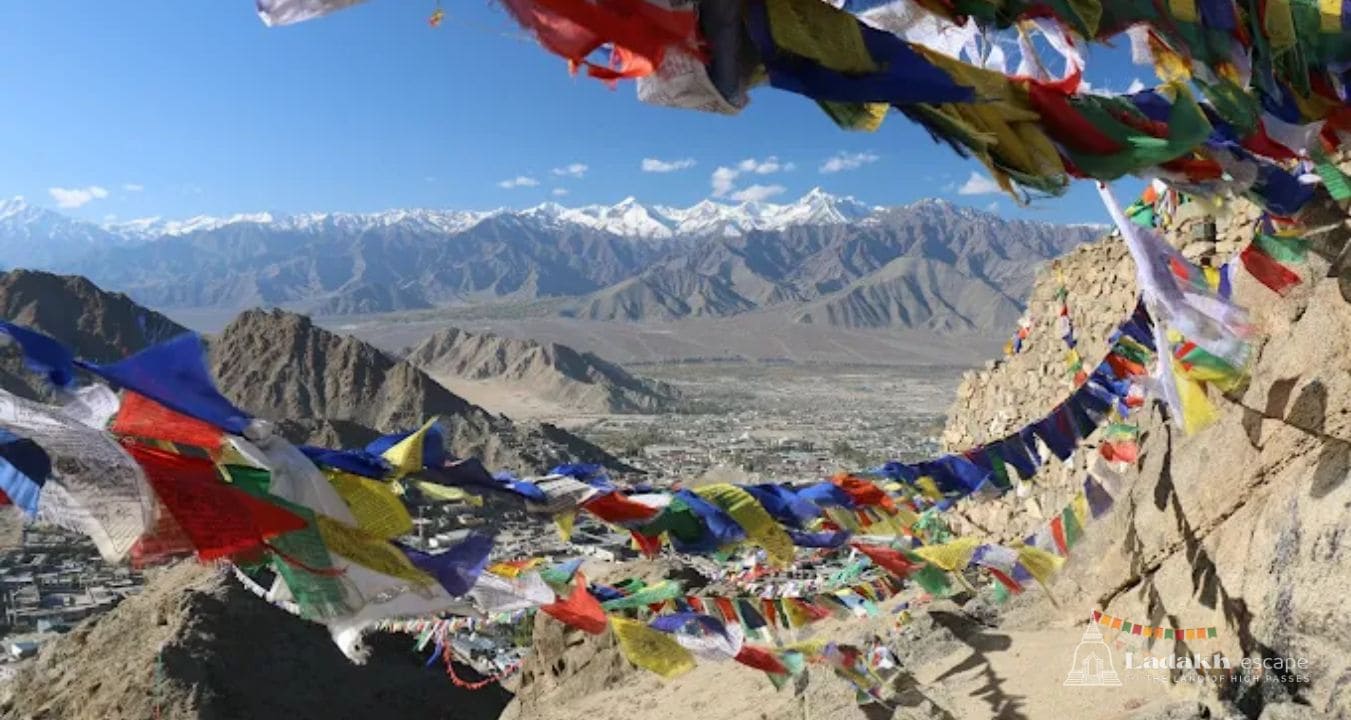
- Spirituality: Rivers are sacred in Tibetan Buddhism. You'll see prayer flags and chortens along the riverbanks, and you'll hear stories of river spirits and guardians.
River Journeys, Following the Indus and Zanskar
The best way to experience the rivers of Ladakh is to follow them. Here are some of the most scenic stretches:
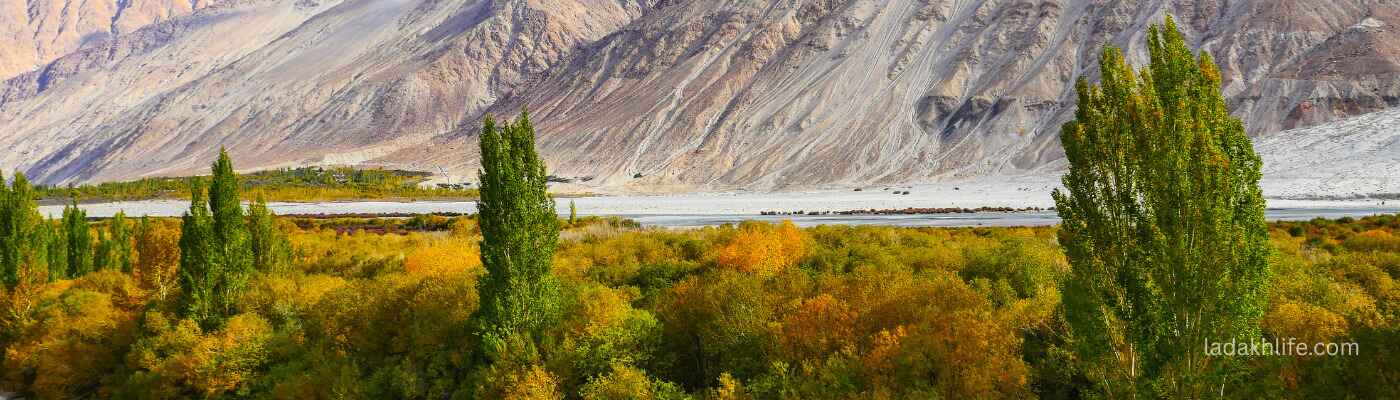
- Leh to Nimoo (along the Indus): Green fields, poplar trees, villages, and the river on one side, mountains on the other. This is the classic drive from Leh to Sangam Point.
- Kargil to Sankoo (along the Suru River): The Suru is a tributary of the Indus, flowing through the green Suru Valley with the Nun Kun peaks in the background.
- Padum to Chilling (along the Zanskar): The road follows the Zanskar River through remote, dramatic landscapes, barren mountains, deep gorges, and the turquoise river below.
- Chilling to Sangam Point (by raft): The best way to see the Zanskar Gorge is from the water, rafting through the canyon, surrounded by cliffs.
Best Time to Experience the Rivers
The rivers change dramatically with the seasons. Here's what to expect:
Summer (June to September): The rivers are high and powerful from snowmelt. This is the best time for rafting, the water is high enough, and the weather is pleasant. The views are spectacular, green fields, blue skies, and the grey-green/turquoise water of the Zanskar.
Autumn (October): The rivers are lower, but the colors are stunning, golden poplar trees, clear skies, and the turquoise water of the Zanskar. Rafting season ends in October (water is too low).
Winter (November to February): The rivers are low and slow. The Zanskar freezes solid in January-February, this is the season for the Chadar Trek. Only for the adventurous and well-prepared.
Spring (March to May): The rivers are low, and the snow is melting. The water is clear, but the weather can be unpredictable. Rafting season starts in late May or June.
Photography Tips for the Rivers
The Indus and Zanskar rivers are among the most photogenic subjects in Ladakh. Here are some tips:
- Best time of day: Late afternoon (3:00-5:00 PM) when the light is golden and the colors are most vivid. Morning (7:00-9:00 AM) also works, with the sun behind you.
- Best locations: Sangam Point (confluence), the road from Leh to Nimoo (meandering river), the Zanskar Gorge (dramatic cliffs), and the Padum-Chilling road (remote river views).
- Best season: Summer (green fields, blue water) and autumn (golden trees, clear skies).
- Lens: A wide-angle lens captures the full sweep of the river and the mountains. A polarizing filter reduces glare and enhances the colors.
- Composition: Look for leading lines (the river winding into the distance), foreground interest (rocks, prayer flags, fields), and dramatic skies.
Essential Tips for Visiting the Rivers
- No permits needed. The rivers themselves are not restricted. However, certain areas near the rivers may require permits (e.g., Zanskar Valley). Check before you go.
- Stay safe near the water. The currents are strong, especially in summer. Don't swim. Don't go too close to the edge. The rocks are slippery.
- Don't pollute. The rivers are the lifelines of Ladakh. Don't throw trash in the water. Carry your waste back to town.
- Respect the local beliefs. The rivers are sacred to many Ladakhis. Don't wash clothes or bathe near prayer flags or chortens.
- For rafting: Book through a registered operator. Wear the safety gear they provide. Listen to your guide. No experience necessary, but you should know how to swim.
- For the Chadar Trek: Do not attempt alone. Hire a registered trekking agency. Prepare for extreme cold, temperatures can drop to -30°C. Carry proper gear (insulated boots, down jacket, thermal layers).
Indus vs Zanskar, A Quick Comparison
- Source: Indus originates in Tibet (Lake Mansarovar). Zanskar originates in the Zanskar range.
- Color: Indus is brown (silt). Zanskar is grey-green/turquoise (glacial melt).
- Length in Ladakh: Indus flows through most of Ladakh. Zanskar flows through the southeastern region.
- Notable feature: Indus is the river that gave India its name. Zanskar is famous for the Chadar Trek.
- Best for: Indus for scenic drives and gentle rafting. Zanskar for dramatic gorges, adventure rafting, and the Chadar Trek.
Why the Indus and Zanskar Rivers Are the Soul of Ladakh
Let me be honest. The Indus and Zanskar rivers are not the most famous attractions in Ladakh. They don't have the Instagram fame of Pangong Tso or the spiritual cachet of Hemis Monastery. But they are the soul of Ladakh.
Without the Indus, the fields of Sham would be barren. Without the Zanskar, the villages of Zanskar would not exist. Without these rivers, Ladakh would be uninhabitable, just rock and sand, mountains and sky, with no green, no life, no people.
The rivers are not just scenery. They are the reason you can visit Ladakh, the reason there are hotels and restaurants and roads. They are the reason the people of Ladakh have survived for centuries in one of the harshest environments on earth.
So when you visit Ladakh, don't just take photos of the monasteries and the lakes. Spend time with the rivers. Walk along the Indus near Leh. Watch the Zanskar from the cliffs near Chilling. Stand at Sangam Point and watch two mighty rivers meet. Feel their power. And understand that you're standing at the source of life in this cold desert.
The Indus and Zanskar rivers are the lifelines of Ladakh. Without them, there would be no green fields, no apricot orchards, no villages, no life. The Indus, brown with silt from Tibet, flows through the heart of Ladakh, nourishing the Sham Valley. The Zanskar, turquoise from glacial melt, cuts through remote gorges, wild and powerful. They meet at Sangam Point, a swirl of color and power, and become one. Stand at their banks. Watch them flow. Understand why Ladakh exists. This is not just water. This is life.