So, What Exactly is Zoji La?
Zoji La is a high mountain pass in the Himalayas, sitting at 11,575 feet (3,528 meters). It lies on the Srinagar-Leh highway (NH 1), approximately 100 kilometers east of Srinagar and 350 kilometers west of Leh. It is the western gateway to Ladakh the first major pass you encounter when coming from Kashmir.
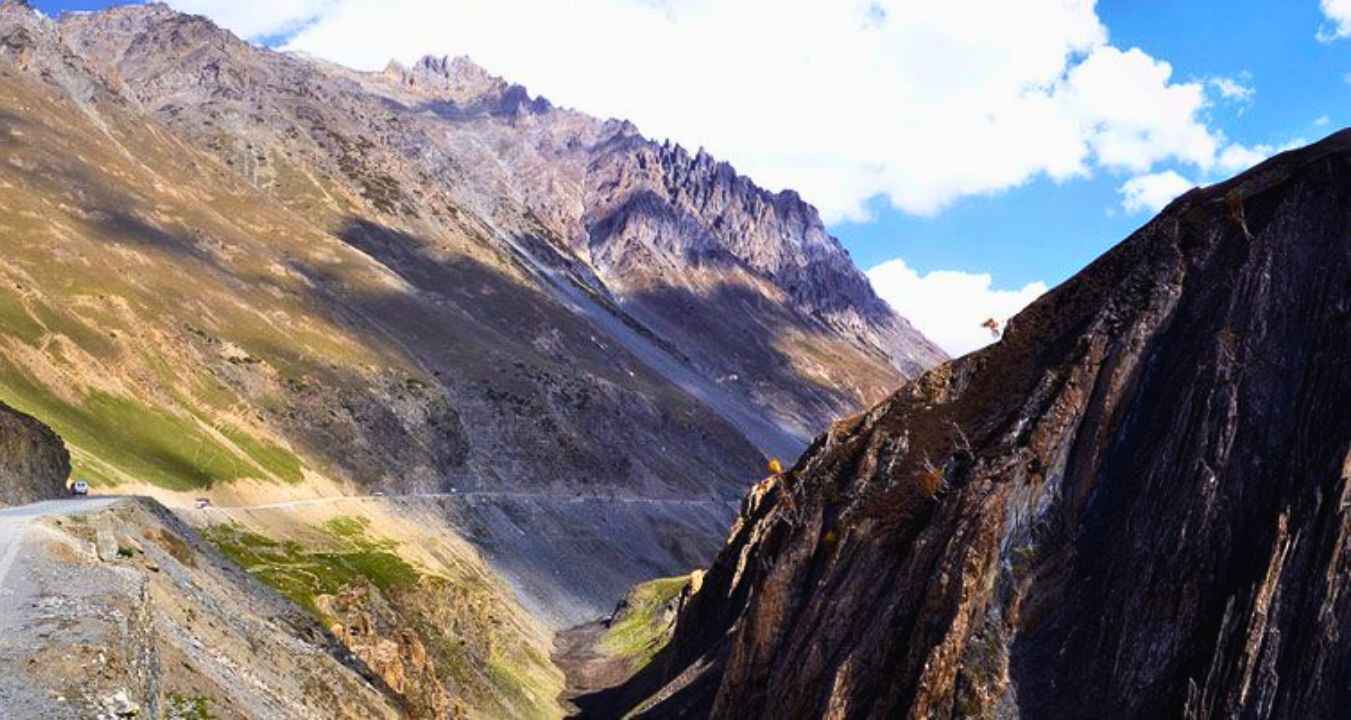
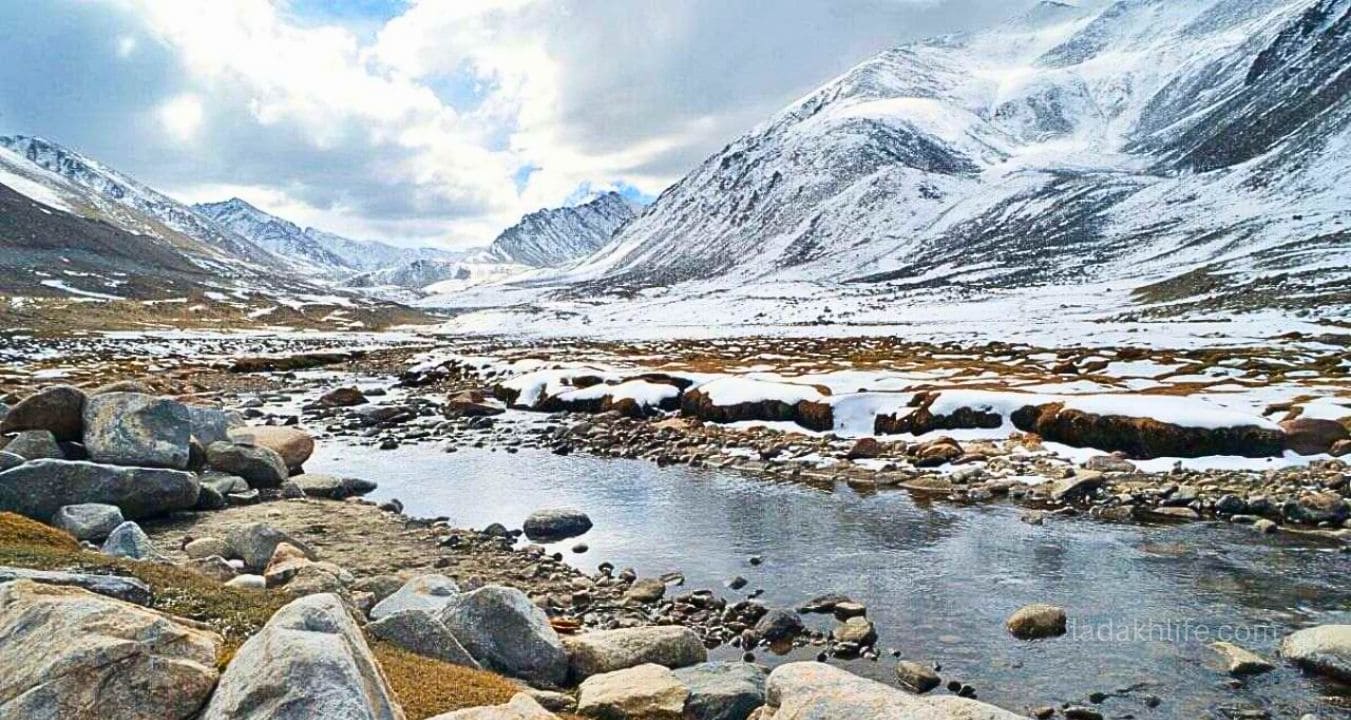
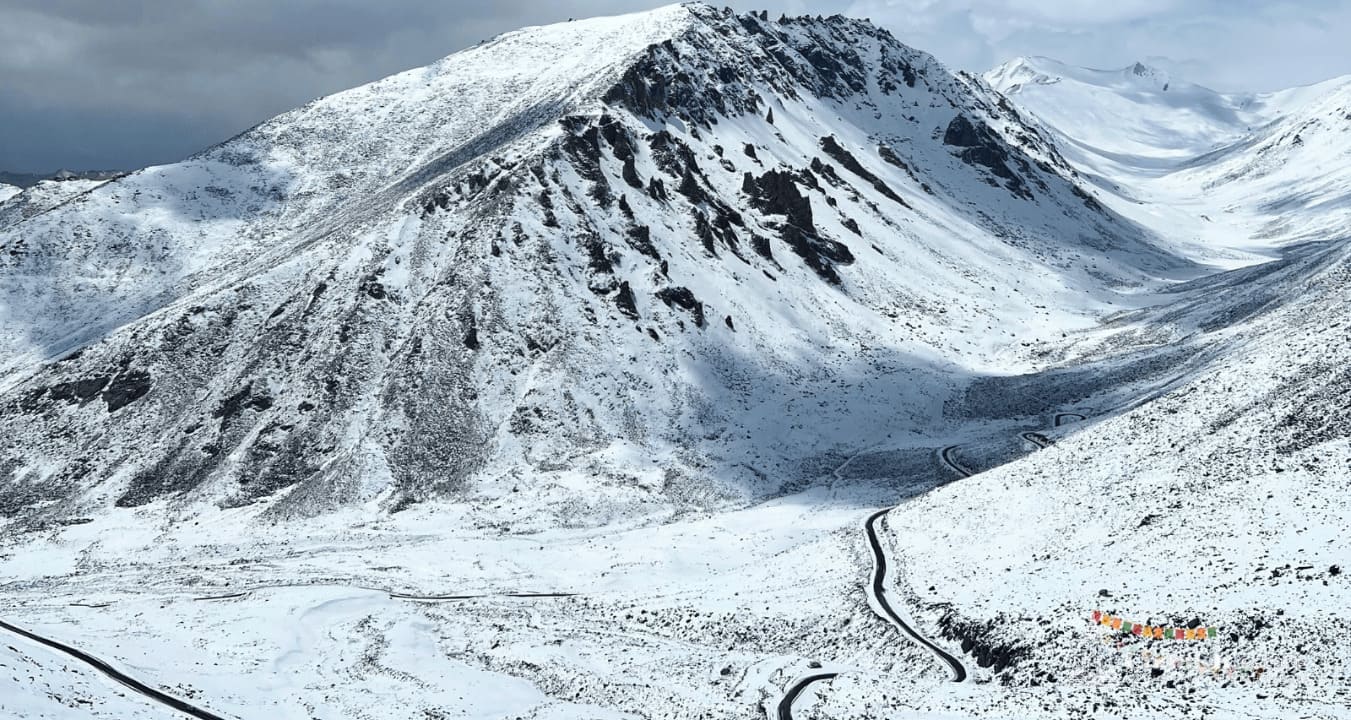
The name "Zoji La" means "the pass of the snow" in the local language and you'll understand why when you see it. Even in summer, snow lingers on the surrounding peaks. The pass is known for its dramatic landscapes, narrow roads, and unpredictable weather. It's also famous for the Zoji La Tunnel, a major infrastructure project currently under construction that will eventually bypass the most dangerous sections of the pass.
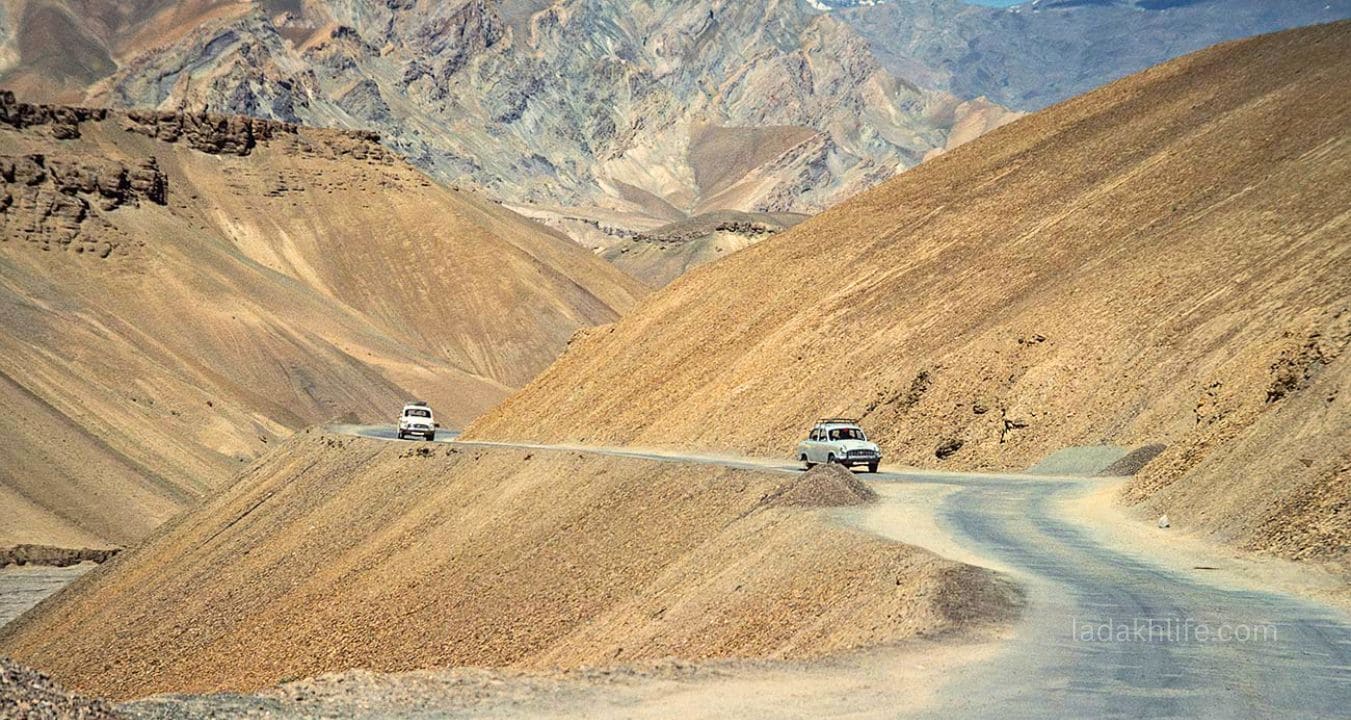
Unlike the high passes near Leh, Zoji La is not at extreme altitude. But don't let that fool you. The challenge here is not the thin air it's the road itself. Narrow, winding, crumbling at the edges, and packed with trucks, Zoji La demands your full attention. It's the pass that separates the lush greenery of Kashmir from the stark desert of Ladakh. And crossing it feels like entering another world.
Why Zoji La is Different from Other Ladakh Passes
Look, Khardung La is higher. Chang La is more famous. But Zoji La has something none of them have drama. Here's what makes it special:
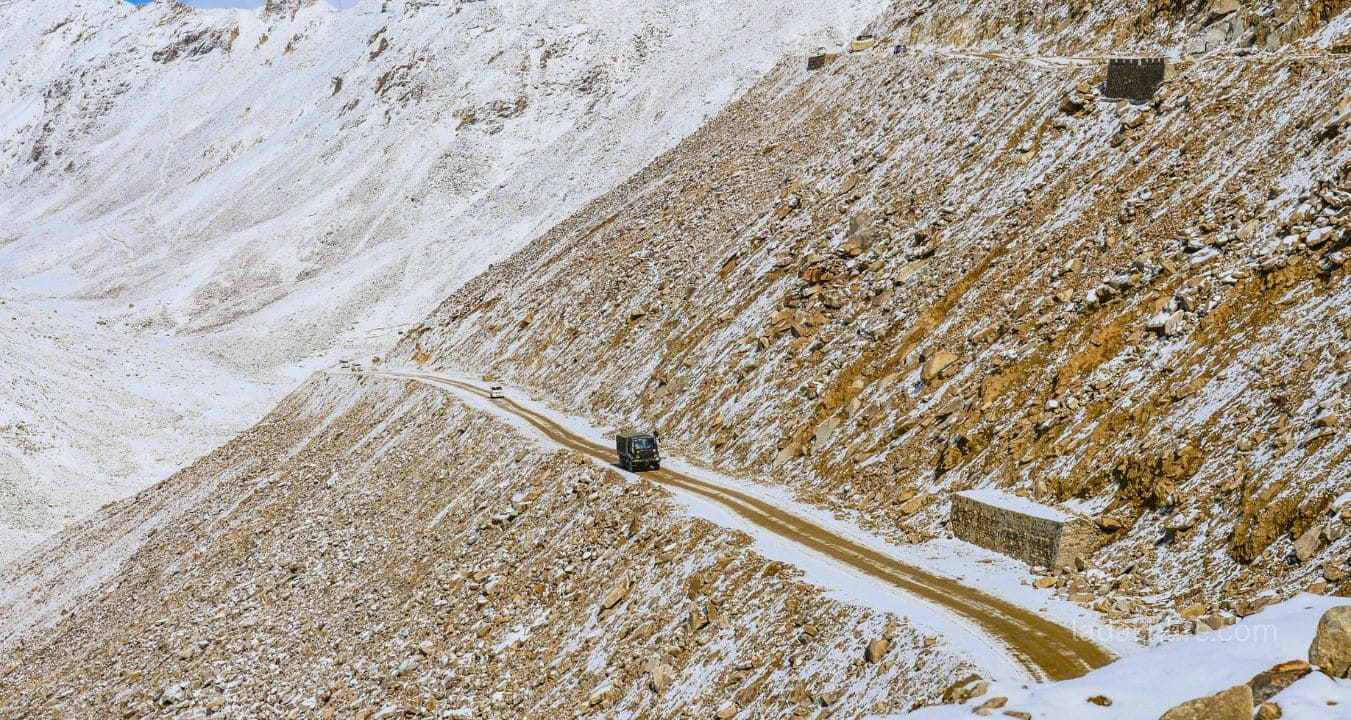
- The narrowest road. Zoji La has some of the narrowest sections of any pass in Ladakh. In places, there's barely room for two vehicles to pass. And the drop on the side is sheer.
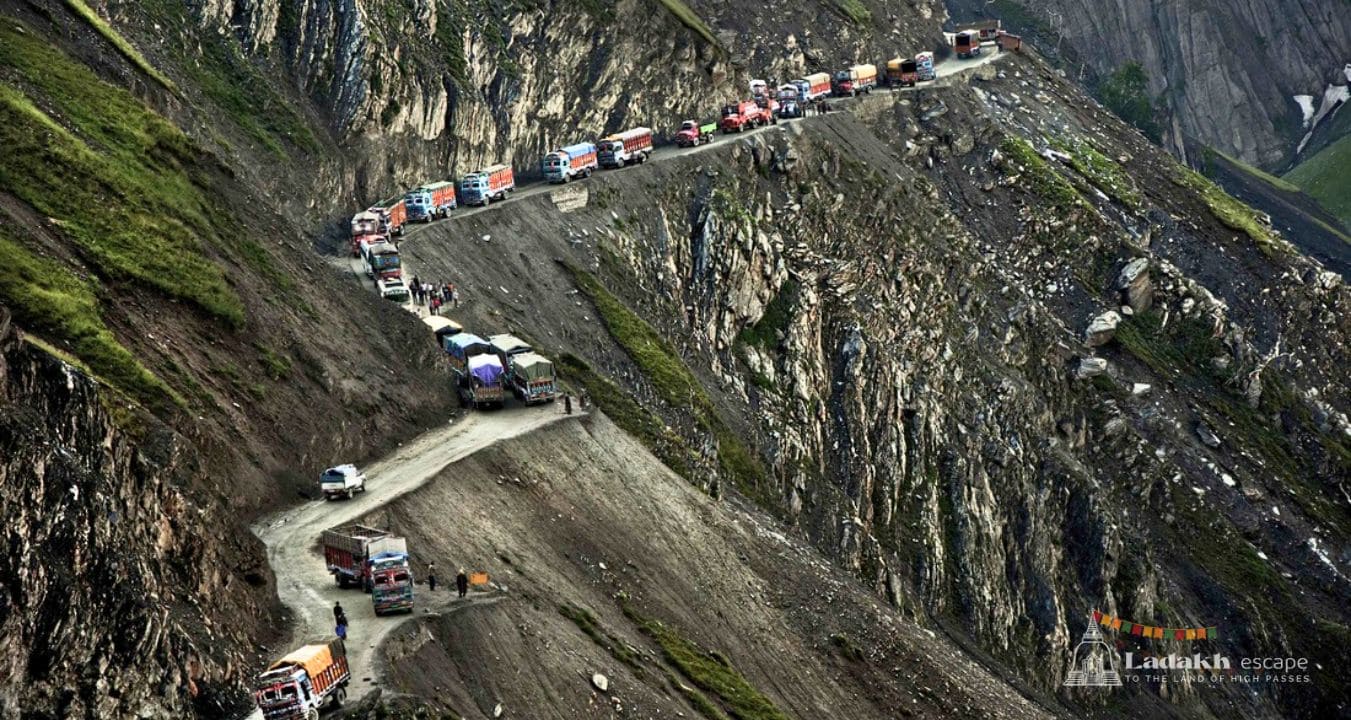
- Non-stop truck traffic. This is a major supply route to Ladakh. Trucks, army convoys, and buses crowd the pass. You'll share the road with vehicles that seem impossibly large for such a narrow road.
- The transition zone. Zoji La marks the boundary between Kashmir and Ladakh. West of the pass, you're in green mountains and pine forests. East of the pass, you're in barren, moon-like desert.
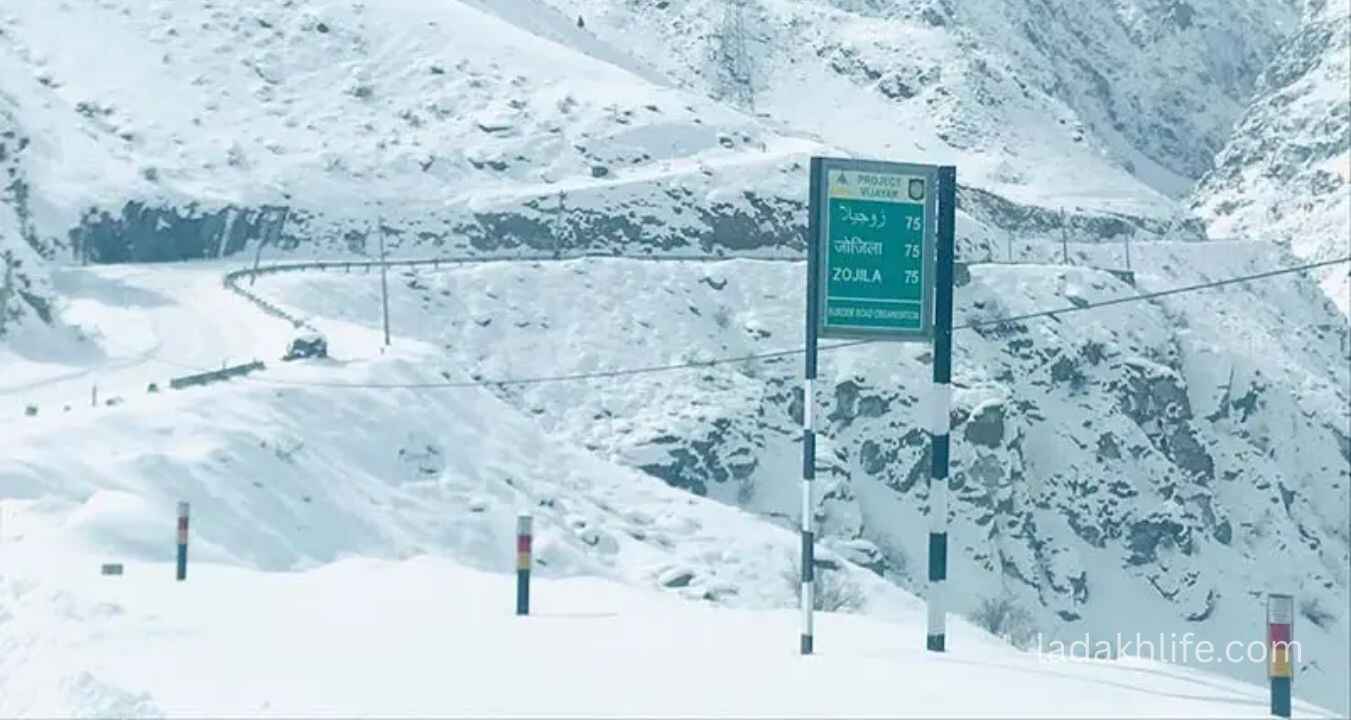
- Unpredictable weather. Zoji La can get snow even in June. The pass closes frequently in winter and early spring. Even in summer, afternoon clouds can roll in and reduce visibility.
- The views. On a clear day, the views from Zoji La are breathtaking snow-capped peaks, deep valleys, and the winding road disappearing into the distance.
The Zoji La Experience (The Honest, White-Knuckle Version)
Let me walk you through what actually happens when you cross Zoji La. No filters. No fancy language. Just the truth.
- Starting from Sonamarg (west): You've been driving through beautiful Kashmir green meadows, pine forests, rushing rivers. The road is good. You're relaxed. You think, "This isn't so bad."
- The climb begins: The road starts climbing. And narrowing. The pavement gets rough. You see your first truck huge, lumbering, taking up most of the road. You hold your breath as it passes.
- The narrow sections: This is where it gets real. The road clings to the mountainside. The drop on the left is hundreds of feet straight down. There are no guardrails. You grip the door handle. Your driver seems unbothered. You try to match his calm. You fail.
- Reaching the top: You see the prayer flags. You see the small shops selling snacks and drinks. You park (if you can find a spot). You step out, and the wind hits you. Your legs feel shaky from adrenaline, not altitude. You walk to the edge (carefully) and look out at the valley below. The road you just climbed looks like a thin line scratched into the mountain.
- At the top: You take your photos. You buy a cup of chai from a small stall. You talk to other travelers everyone has the same wide-eyed look. You exchange stories of near-misses and tight squeezes. You feel a strange sense of camaraderie.
- The descent toward Dras: You drive down the eastern side, and suddenly the landscape changes. The green disappears. The mountains turn brown and barren. You're in Ladakh now. For real.
That's Zoji La. Not the highest. Not the most famous. But the most dramatic. And the one you'll remember most vividly.
The Crown Jewels of Zoji La (Don't Miss These)
1. The Hairpin Bends A Test of Nerve
Zoji La is famous for its hairpin bends sharp, narrow turns where you can't see what's coming. Every bend is an adventure. Take them slow. Honk before you turn (it's the local custom). And breathe.
2. The Prayer Flags at the Summit
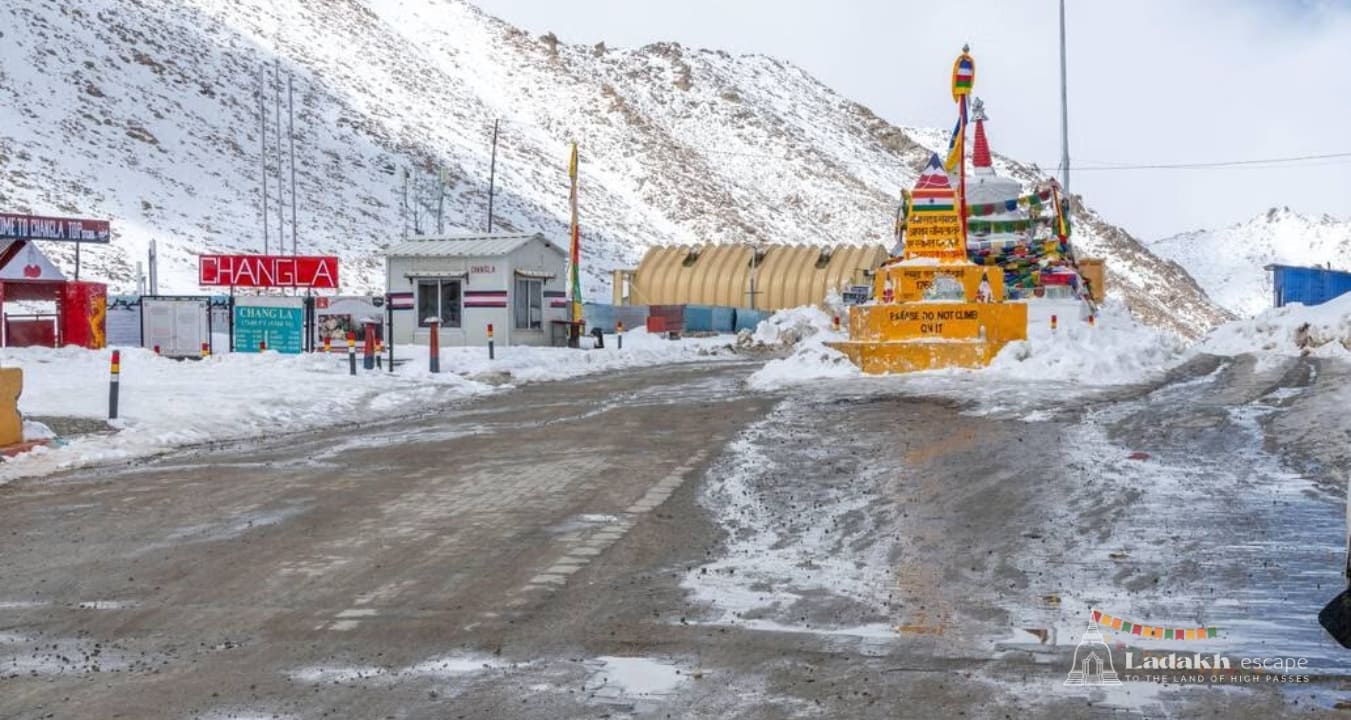
At the top of Zoji La, there are prayer flags bright against the stark mountain landscape. They flutter in the constant wind, a reminder that you're entering the Buddhist heartland of Ladakh.
3. Small Shops & Chai Stalls
Unlike the higher passes, Zoji La has small shops and chai stalls at the top. Stop here. Warm up with a cup of sweet chai. Buy some snacks. Talk to the shopkeepers they have stories about the pass that will make your hair stand on end.
4. Views of the Dras Valley
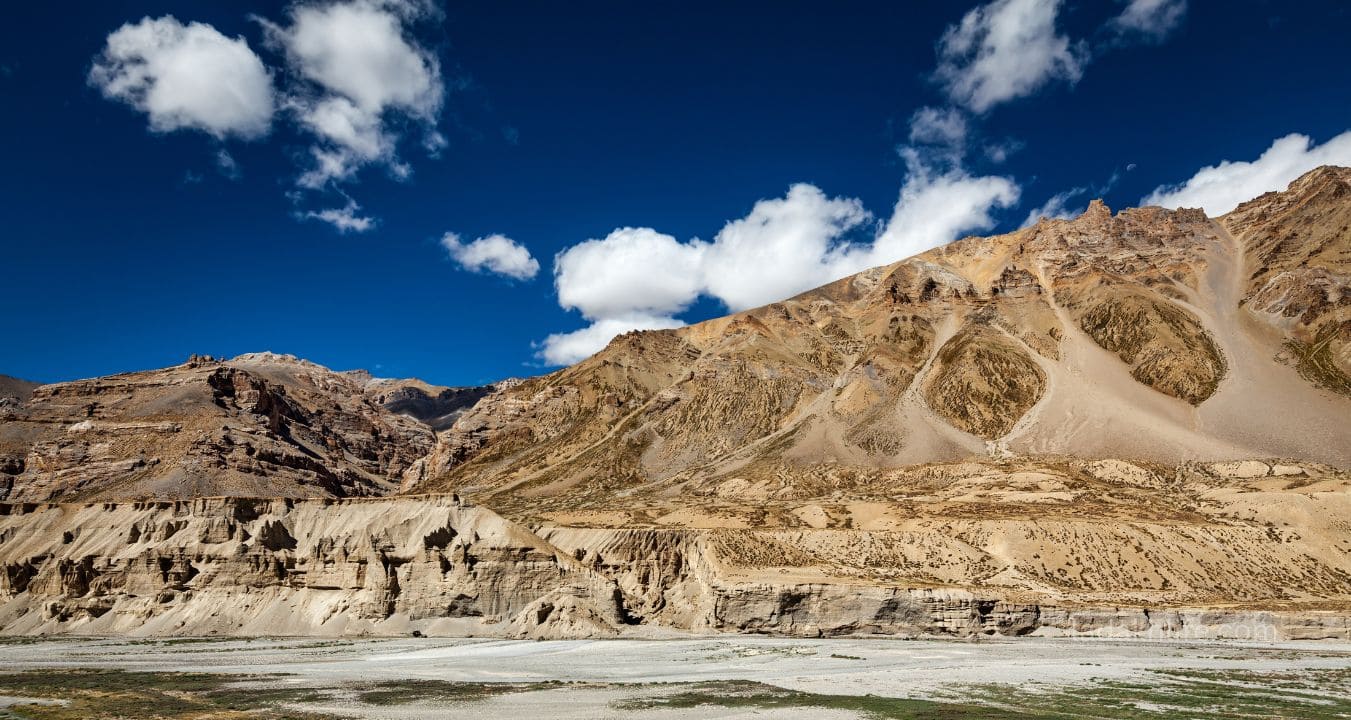
From the eastern side of Zoji La, you can see the Dras Valley stretching out below a wide, barren valley surrounded by snow-capped peaks. This is the "Gateway to Ladakh," and the views are stunning.
5. The Transition Landscape
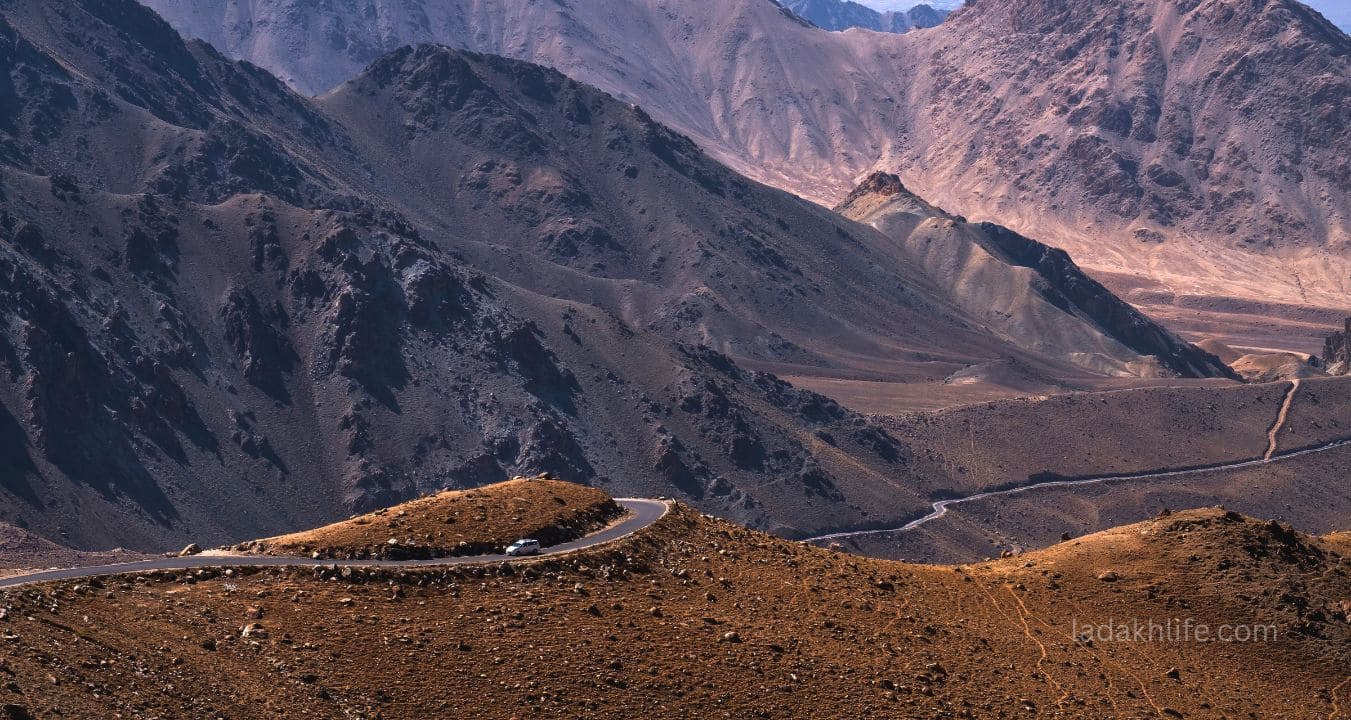
This isn't a "sight" in the traditional sense, but it's the most special thing about Zoji La. One moment you're surrounded by green, pine-covered mountains. The next, you're in brown, barren desert. The change is sudden and dramatic. Stop at the top. Look west. Look east. You're standing between two worlds.
6. The Zoji La Tunnel (Under Construction)
Keep an eye out for the Zoji La Tunnel a massive infrastructure project that will eventually bypass the most dangerous sections of the pass. When complete, it will cut travel time and make the crossing safer. But for now, the old road remains. Cross it while you can soon, the adventure will be gone.
Best Time to Visit Zoji La
Zoji La has a short season, even though it's lower than many Ladakh passes. Snow is the main challenge.
June to September is the main season. July and August are the most reliable months the road is usually clear, the weather is relatively stable, and the pass is open. Daytime temperatures at the top are around 5°C to 15°C, but the wind makes it feel colder.
June and September: Shoulder months. June can have snow near the pass the road typically opens in mid-June. September is beautiful clear skies, crisp air, fewer vehicles but it's colder.
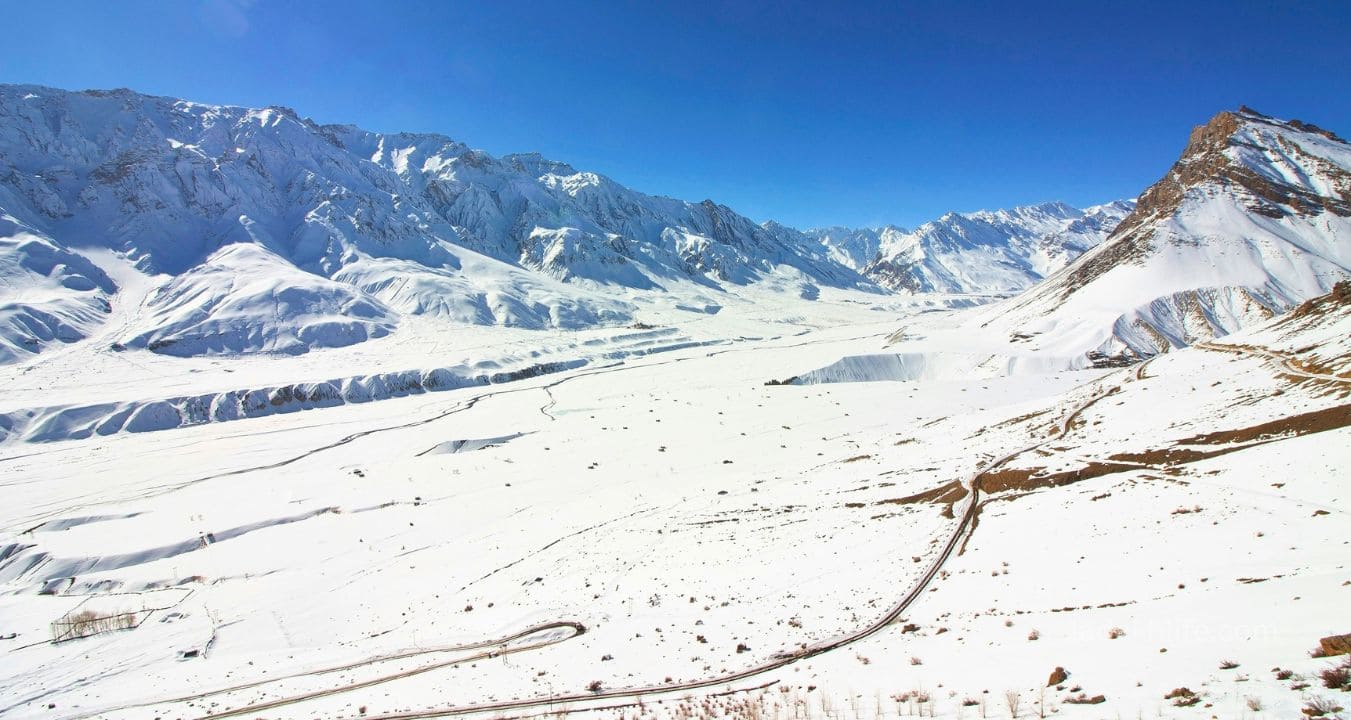
October to May: The pass is often closed due to heavy snowfall. Even if it opens briefly on a clear day, it's risky. Only attempt in winter if you're an experienced driver with a 4x4 and extreme cold weather gear.
Pro tip: Start your journey from Sonamarg early by 7 AM at the latest. Traffic builds up quickly at Zoji La, and afternoon weather can be unpredictable. Go early, cross before the crowds, and reach Kargil or Dras before dark.
Where to Stay Near Zoji La
You cannot stay at Zoji La. There are no hotels at the pass. The nearest accommodations are in Sonamarg (west) or in Dras / Kargil (east).
In Sonamarg (about 40 km west of Zoji La): Several hotels and guesthouses. A good place to stay before crossing the pass. Book in advance during peak season.
In Dras (about 60 km east of Zoji La): Basic homestays and guesthouses. Dras is known as the "Second Coldest Inhabited Place on Earth" but in summer, it's pleasant. Stay here to break your journey.
In Kargil (about 120 km east of Zoji La): Several hotels and guesthouses. Hotel Barula, Kargil Continental, and Zojila Residency are good options.
No camping at the pass. It's too narrow, too busy, and not allowed. The nearest camping is at Sonamarg.
How to Get to Zoji La
Zoji La is on the main Srinagar-Leh highway (NH 1). If you're traveling between Srinagar and Leh, you will cross this pass.
Route: Srinagar → Sonamarg (80 km) → Zoji La (another 20 km) → Dras → Kargil → Lamayuru → Leh.
From Srinagar (100 km, 3-4 hours to the pass): Drive Srinagar → Sonamarg (2-3 hours) → Zoji La (1-2 hours). The road is good until Sonamarg, then gets narrow and rough.
From Leh (350 km, 8-10 hours): Drive Leh → Lamayuru → Kargil → Dras → Zoji La → Sonamarg. Most travelers break this journey in Kargil.
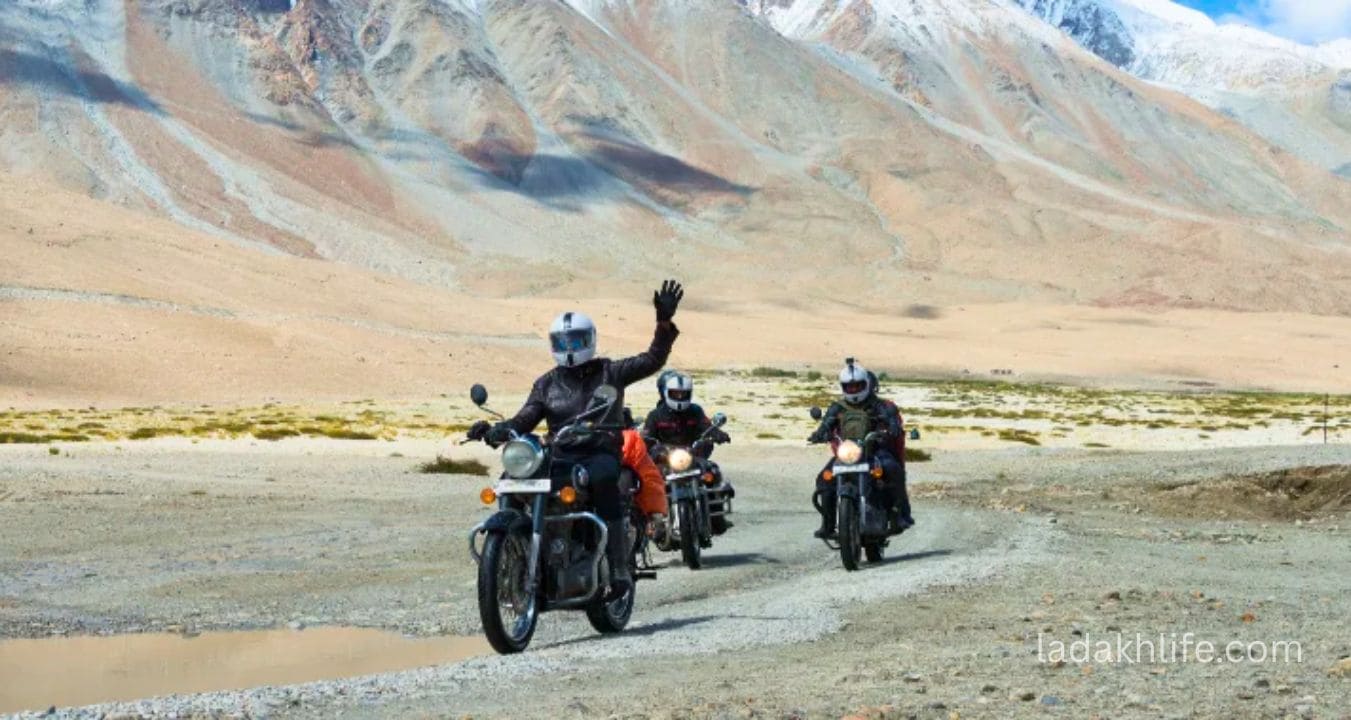
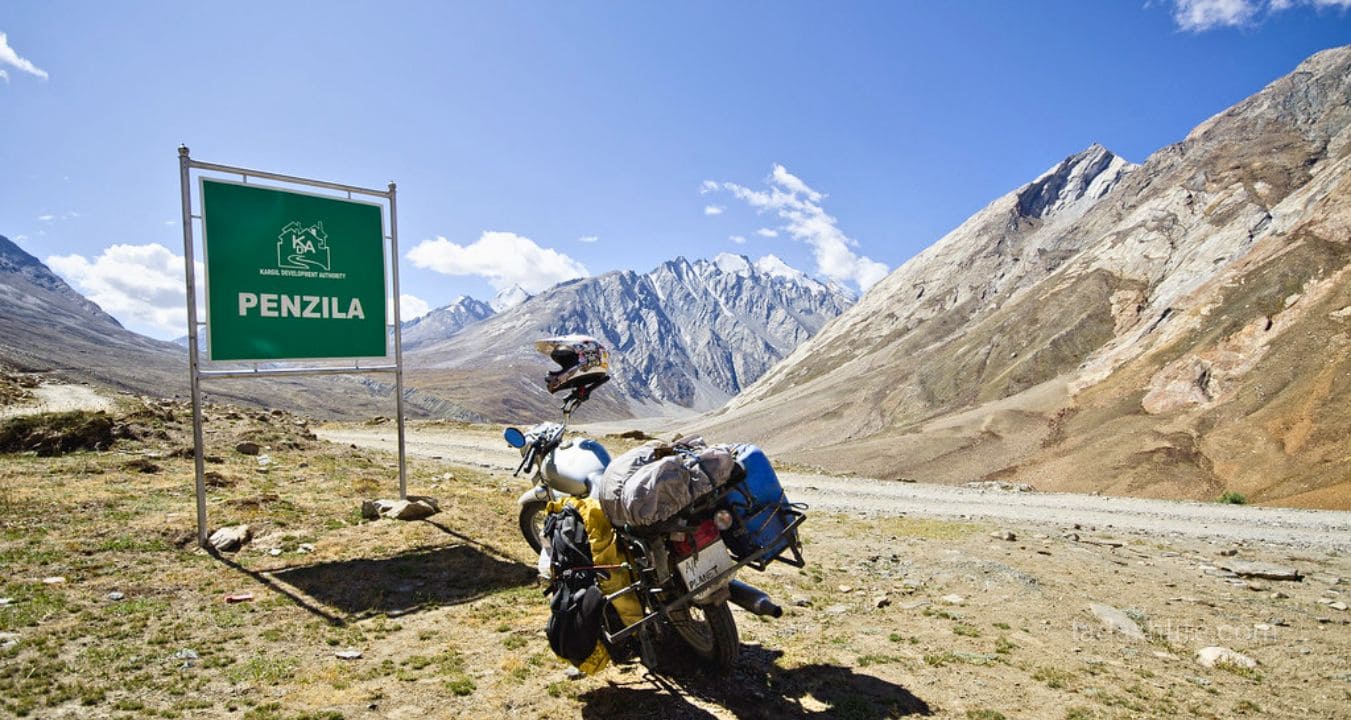
By bike: The classic Ladakh experience. Zoji La is challenging on a bike the narrow roads, loose gravel, and truck traffic require full attention. Watch for ice patches even in summer. Wear all your gear.
By car (4x4 recommended): A regular car can do it, but a 4x4 gives you better control on the narrow sections and loose gravel. The road is paved in places but has long stretches of rough pavement and potholes.
By bus: Buses run from Srinagar to Leh via Kargil. They cross Zoji La. They're cheap but slow, crowded, and uncomfortable. Plus, the height and narrow roads can be terrifying on a large bus. Not recommended unless you're on a tight budget.
By taxi: Shared taxis (sumos) run from Srinagar to Kargil and Leh. This is a good option local drivers know the road well. Expect to pay ₹2,000-3,000 per person from Srinagar to Kargil.
Altitude, Fitness, and Acclimatization
At 11,575 feet, Zoji La is lower than Leh. Altitude sickness is less of an issue here. But if you're coming from Srinagar (near sea level), you'll feel the climb.
- If coming from Srinagar, take it easy. You're climbing from 5,000 ft (Srinagar) to 11,500 ft in a few hours. Some people feel it headaches, fatigue, shortness of breath.
- Drink plenty of water. 3-4 liters a day. Dehydration makes altitude symptoms worse.
- If you feel a headache or nausea, rest. These are common on the Srinagar-Leh route. Don't push yourself.
- No special fitness required for the drive. But if you're on a bike, you need good balance and confidence on narrow, winding roads.
- The real challenge is the road itself, not the altitude. Focus on driving safely. The views can wait.
What to Pack for Zoji La
Zoji La is colder than Sonamarg, and the wind makes it feel even colder. Here's what you need:
- Warm layers: Fleece sweater, down jacket or heavy woolen sweater, windproof outer layer. The wind at Zoji La can be biting.
- Gloves: Warm gloves. Your hands will get cold on the pass, especially if you're on a bike.
- Headwear: Woolen beanie that covers your ears.
- Scarf or buff: For your face. The wind can be strong.
- Shoes: Sturdy shoes or boots. It can be muddy or snowy.
- Sunglasses: The glare off snow and bare rock can be intense.
- Sunscreen & lip balm: The UV at 11,500 feet is strong.
- Water & snacks: There are small shops at the top, but carry your own just in case.
- Patience: The most important thing to pack. You'll need it.
Essential Tips for Visiting Zoji La
- No permits needed for Zoji La. Unlike passes near the Tibetan border, Zoji La is on the main Srinagar-Leh highway and doesn't require an Inner Line Permit.
- Start early. Leave Sonamarg by 7 AM. Traffic builds up quickly. Trucks, buses, and army convoys crowd the pass. Go early to avoid the worst of it.
- Be patient with trucks. They're slow, they're large, and they have the right of way on narrow sections. Don't try to pass dangerously. Wait for a safe spot.
- Honk before blind turns. It's the local custom. A short honk warns oncoming traffic. Use it. It saves lives.
- Check road conditions before you go. Ask at your hotel in Sonamarg or at the taxi stand. The pass can be closed due to snow even in June.
- Fill your fuel tank in Sonamarg or Kargil. There's no petrol station at Zoji La. The nearest are in Sonamarg (west) and Dras/Kargil (east).
- Don't litter. Carry your waste back to Sonamarg or Kargil. There's limited garbage collection at the pass.
- Be careful where you stop. The pass is narrow. Don't park on blind corners. Pull off into designated areas if possible.
- Enjoy the chai at the top. The small shops at Zoji La serve hot chai and snacks. Stop, warm up, and chat with other travelers. It's part of the experience.
Zoji La vs Other Passes in Ladakh
- Zoji La vs Fotu La (13,479 ft): Fotu La is higher and the highest point on the Srinagar-Leh highway. Zoji La is lower but more dramatic. Both are on the same road. Cross both.
- Zoji La vs Khardung La (18,380 ft): Khardung La is much higher, more famous, and requires permits. Zoji La is lower but has more challenging road conditions. Very different experiences.
- Zoji La vs Tanglang La (17,582 ft): Tanglang La is on the Manali-Leh highway, higher and more remote. Zoji La is on the Srinagar-Leh route, lower but more crowded. Both are worth crossing.
- Zoji La vs Namika La (12,139 ft): Namika La is also on the Srinagar-Leh highway, east of Fotu La. It's quieter and less dramatic. Zoji La is the more famous of the two.
Why Zoji La is the Real Beginning of Your Ladakh Adventure
Let me be honest. The passes near Leh Khardung La, Chang La they're famous. They're high. They're on every bucket list. But for most travelers, the real adventure begins at Zoji La.
Why? Because Zoji La is the first test. It's where you learn to navigate narrow roads with sheer drops. It's where you share the road with massive trucks on blind corners. It's where the landscape changes from the familiar green of Kashmir to the stark, beautiful desert of Ladakh.
When you cross Zoji La, you're not just crossing a pass. You're earning your entry into Ladakh. You're proving that you can handle what comes next. And when you finally reach Leh after days of driving, after multiple passes, after all the challenges you'll look back and remember Zoji La as the moment it all began.
So when you approach Zoji La, don't be afraid. Be alert. Be patient. Be careful. And when you reach the top, take a moment. Look back at the road you've climbed. Look ahead at the desert waiting for you. And know that you've just crossed the gateway to one of the most beautiful places on earth.
Zoji La is not the highest pass in Ladakh. It's not the most famous. But it might be the most memorable. The narrow roads, the sheer drops, the truck traffic, the sudden transition from green to brown all of it combines to create an experience you won't forget. Cross it carefully. Cross it respectfully. And when you reach the top, take a deep breath. You've just entered Ladakh. The adventure is only beginning.