So, What Exactly is Dah Village?
Dah (pronounced "Da") is a small village in the Sham Valley region of Ladakh, sitting at approximately 10,500 feet (3,200 meters). It's located about 165 kilometers west of Leh and about 40 kilometers north of Kargil, in a side valley off the main Srinagar-Leh highway.
Dah is one of only two remaining Aryan villages in Ladakh (the other is Hanu, a few kilometers away). The people here belong to the Brokpa (or Drokpa) community, an ethnic group that is distinct from the Tibetan-descended Ladakhis who make up most of the region's population. The Brokpas have lighter skin, often have green or blue eyes, and have their own language, customs, and traditional dress.
According to local legend, the Brokpas are the descendants of the armies of Alexander the Great, who supposedly settled in this remote valley after his invasion of India in 326 BCE. While historians debate the accuracy of this claim (genetic studies show some European ancestry but not specifically Greek), the Brokpas themselves strongly identify with this origin story. And honestly? When you see them, their fair skin, their distinctive features, their unique culture, you can understand why the legend persists.
Dah is not on the main tourist circuit. The road is narrow and winding. The village is small (maybe 50-60 houses, a few hundred people). There are no hotels, no restaurants, no souvenir shops. Just a quiet village where people live simply, farming apricots and walnuts, tending their livestock, and preserving traditions that have survived for thousands of years.
Why Dah is Ladakh's Most Unique Village
Dah is completely different from any other village in Ladakh. Here's why:
- The Brokpa people. Distinct ethnicity with lighter skin, green/blue eyes, and unique features, unlike any other community in Ladakh.
- The Aryan legend. Believed to be descendants of Alexander the Great's armies. Whether true or not, the story adds a layer of mystery and fascination.
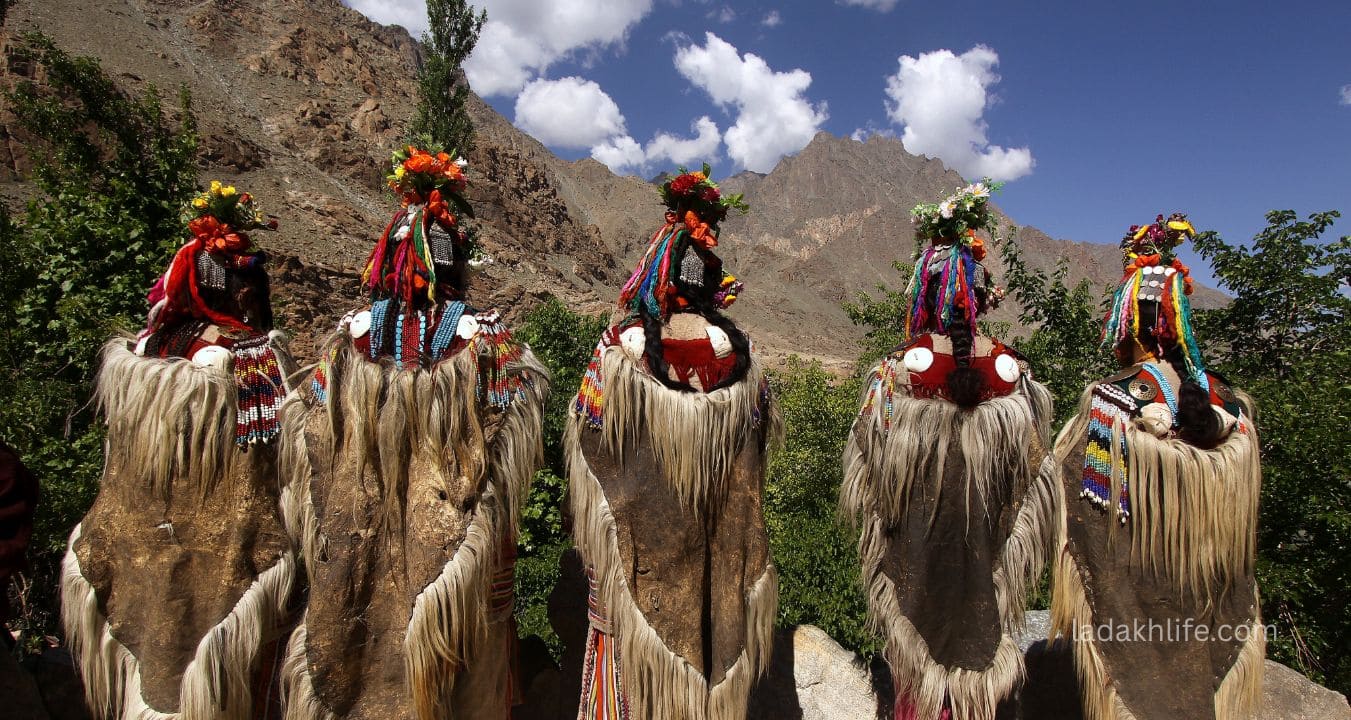
- Traditional costumes. Brokpa women wear elaborate floral headgear called "tupi" or "dokra", adorned with flowers, shells, and silver ornaments. Their woolen dresses are embroidered with colorful patterns. You won't see anything like it anywhere else in the Himalayas.
- Unique architecture. Brokpa houses are built from stone and wood, with intricately carved doors and windows. Some of the oldest houses in Dah are over 300 years old.
- Organic farming. The Brokpas are subsistence farmers, growing apricots, walnuts, apples, barley, and wheat on terraced fields carved into the mountainside. Their produce is organic, delicious, and famous across Ladakh.
- No crowds. Dah receives maybe a handful of tourists per week. You'll have the village almost to yourself. The peace is profound.
The Dah Experience (The Honest Version)
Let me walk you through what actually happens when you visit Dah. No filters. No fancy language.
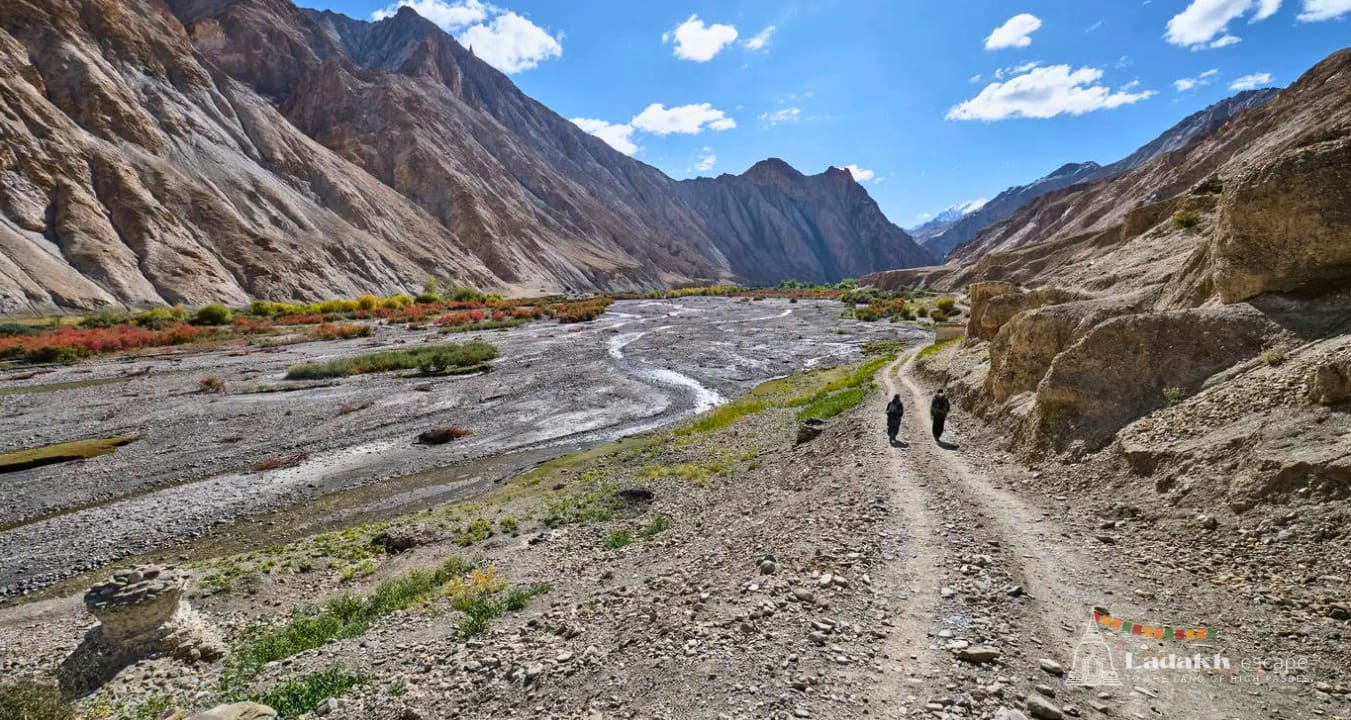
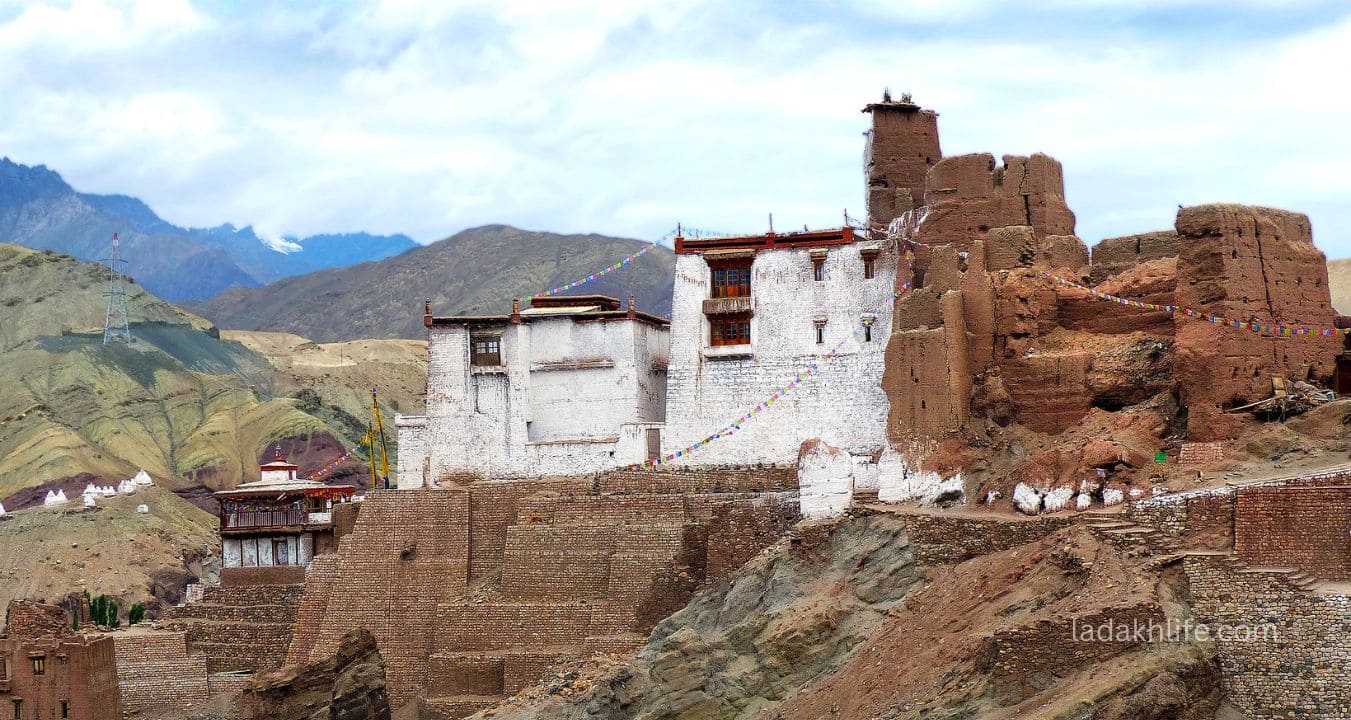
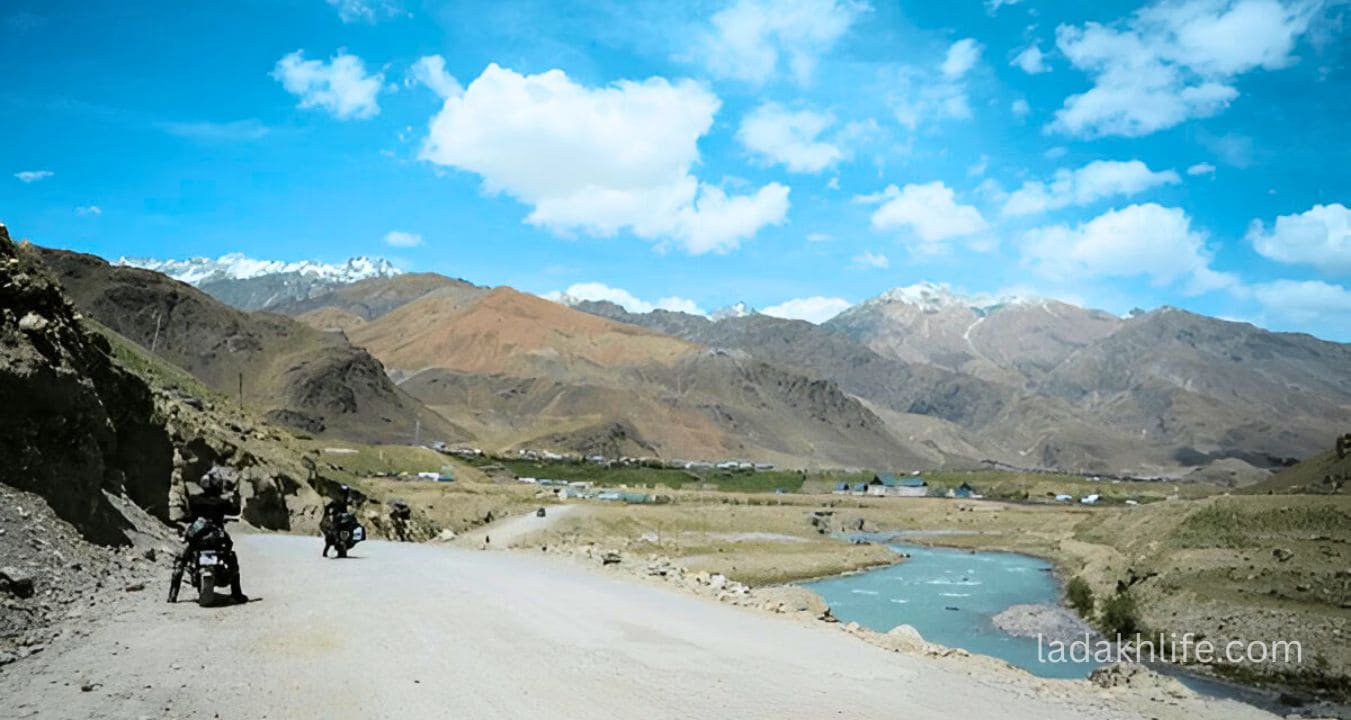
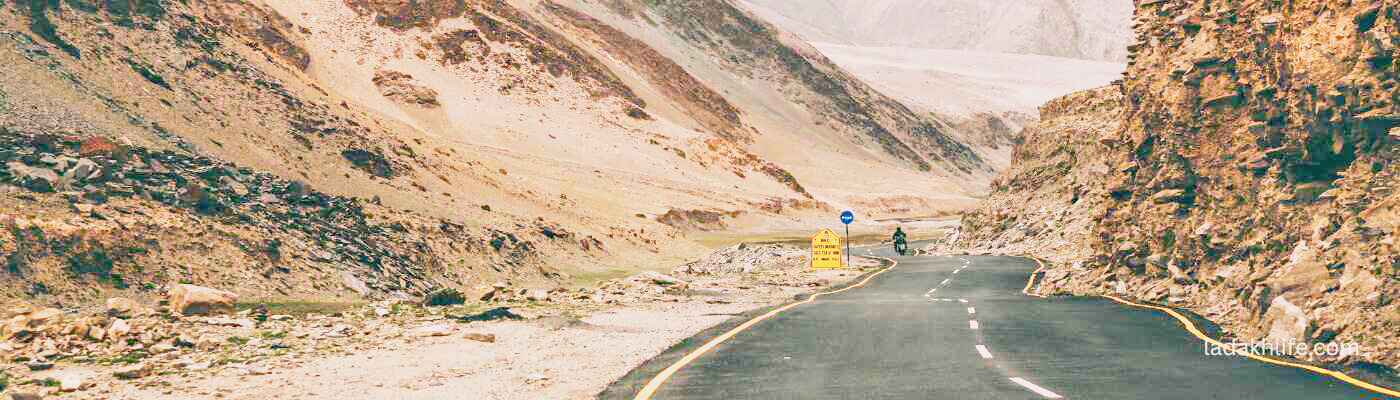
- The drive from Leh or Kargil: If you're coming from Leh, you'll drive through the Sham Valley, Likir, Basgo, Alchi, then turn north off the main highway. The road climbs into a side valley, following a small river. The landscape is barren, dramatic, beautiful.
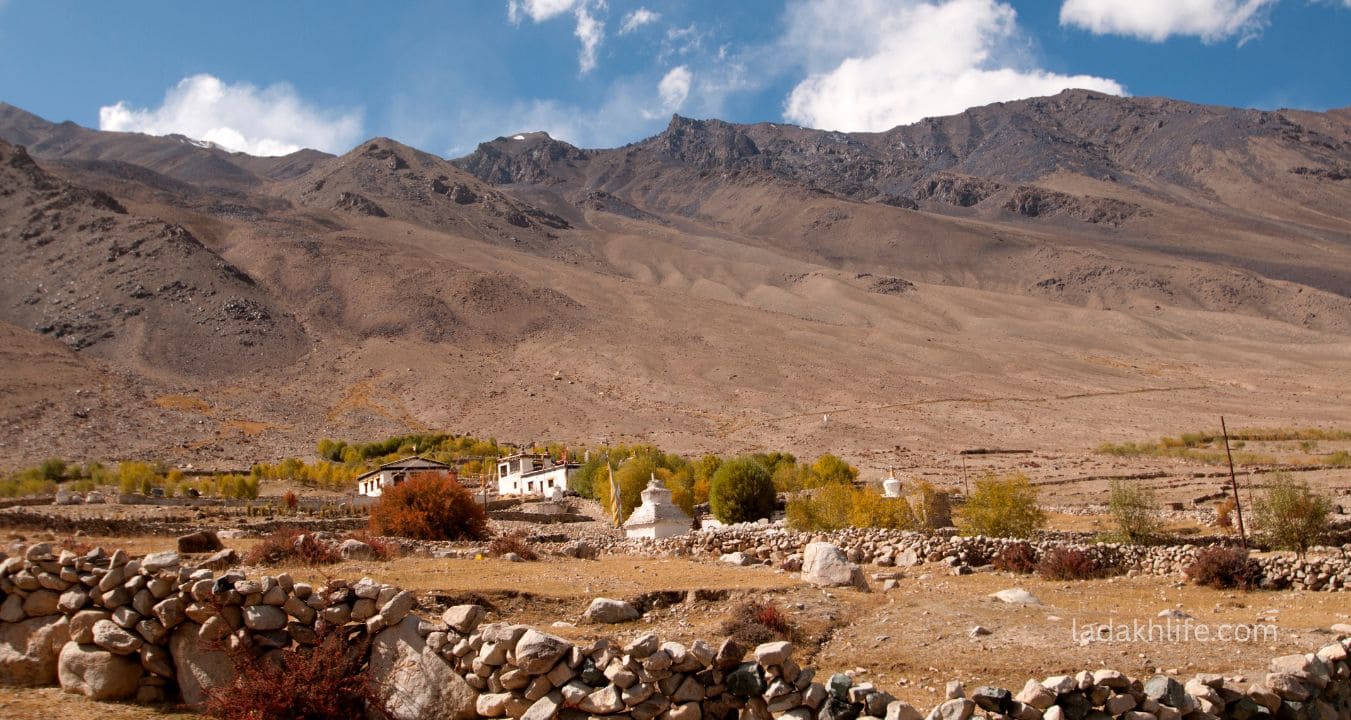
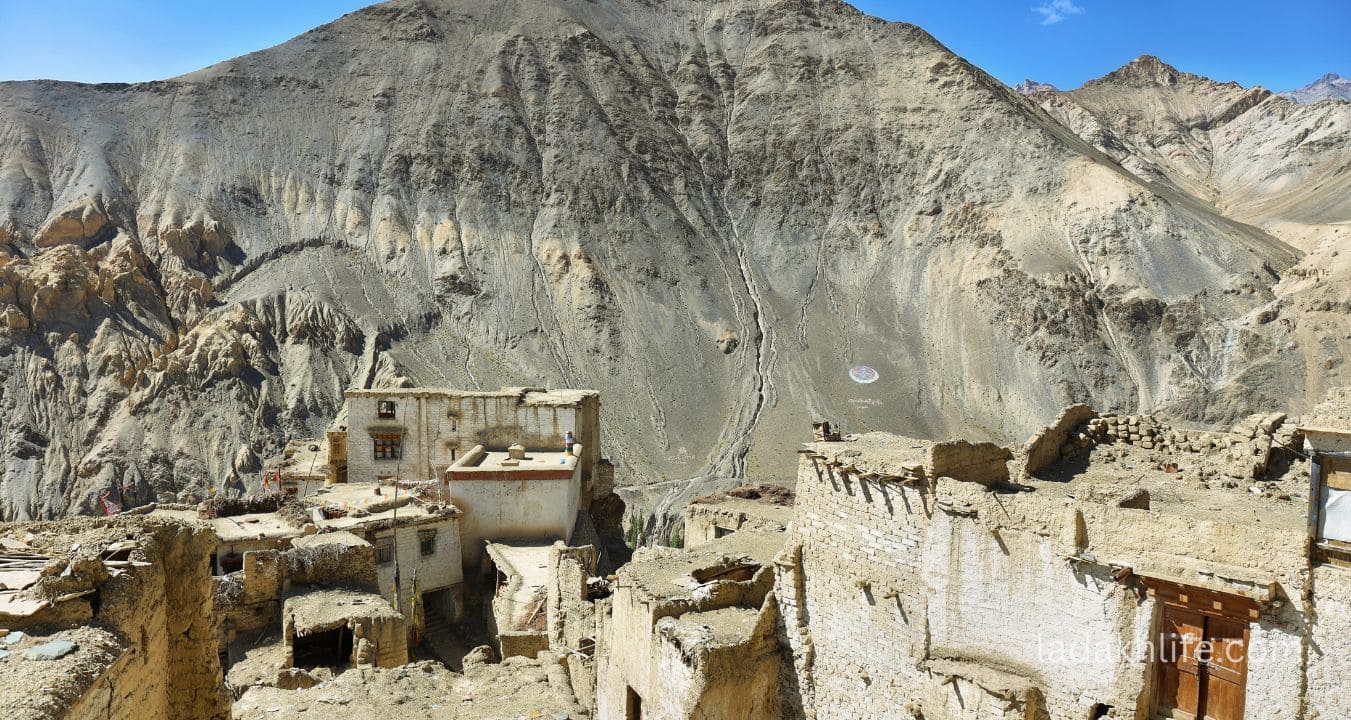
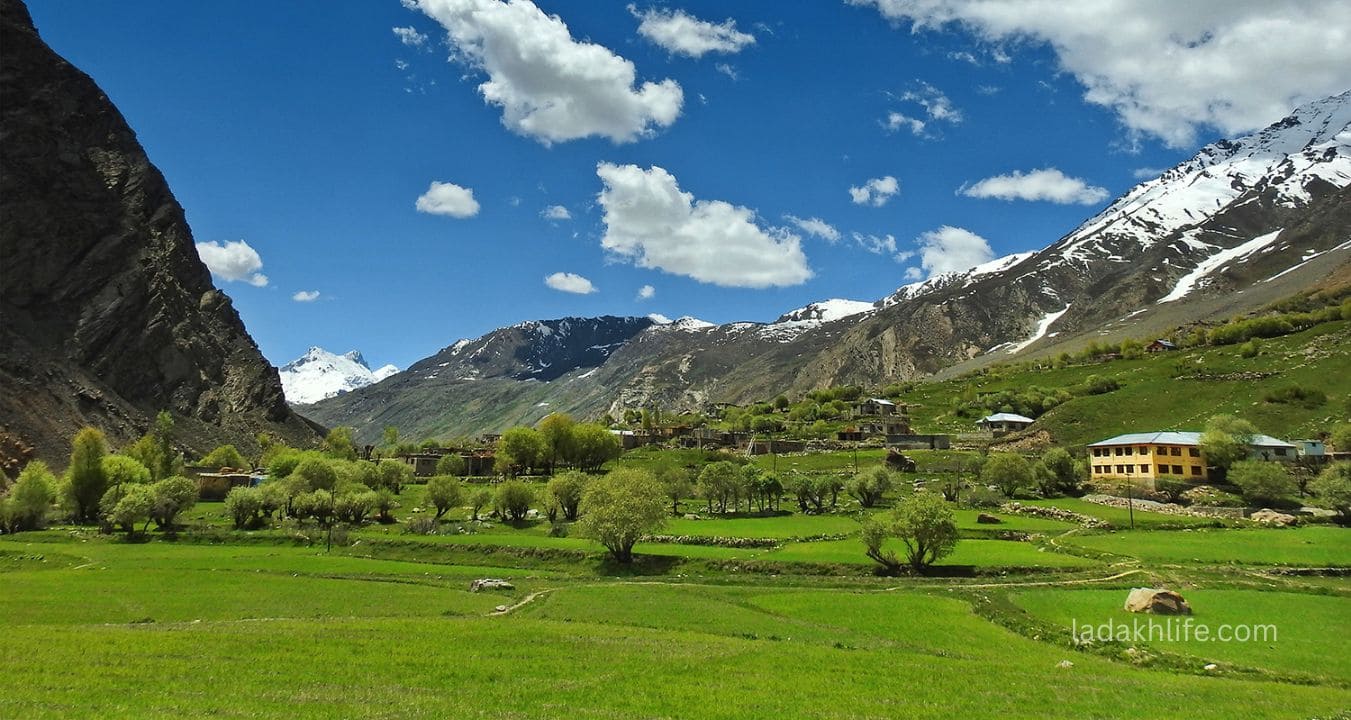
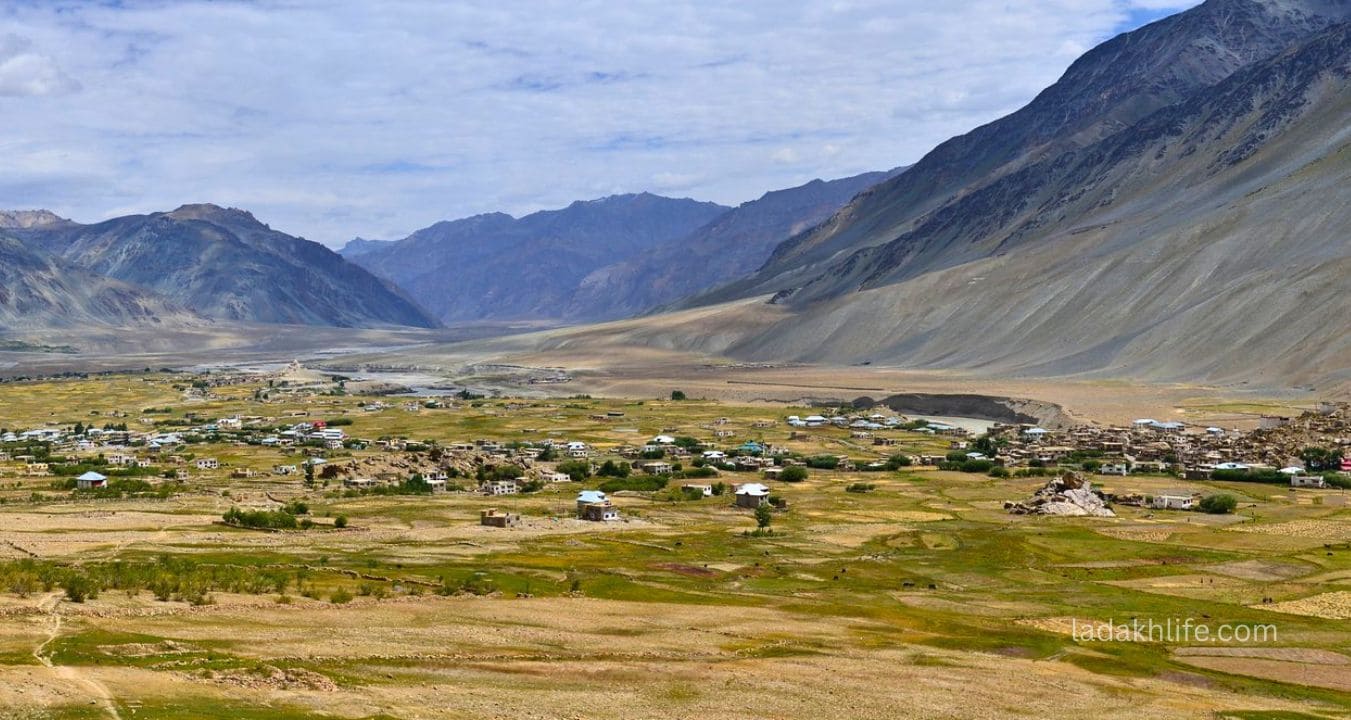
- Arriving in Dah: You see the village, a cluster of stone houses clinging to the hillside. Green terraced fields. Prayer flags. And people who look different, lighter skin, colorful clothes, floral headgear. You feel like you've traveled back in time.
- Meeting the Brokpas: The villagers are curious but welcoming. A few words of Ladakhi or Hindi go a long way. They'll invite you to see their homes, their fields, their crafts. Some of the older women speak only Brokpa, a language completely different from Ladakhi. You communicate with smiles and hand gestures.
- Seeing the traditional dress: The women's headgear is the most striking thing. Flowers, shells, silver ornaments, colorful ribbons, each piece has meaning. Some of the ornaments are passed down through generations. The woolen dresses are handwoven, embroidered with geometric patterns.
- The Aryan legend: Someone will tell you the story, Alexander the Great, his armies settling here, the Brokpas as their descendants. They tell it with pride. Whether you believe it or not, you listen respectfully. It's their story, and they own it.
- Walking through the village: Narrow lanes, stone walls, carved wooden doors. Apricot trees heavy with fruit (if you visit in July-August). Children playing. Women weaving. Men working in the fields. It's simple. It's real. It's beautiful.
That's Dah. Not glamorous. Not famous. But culturally rich, peaceful, and unforgettable.
The Crown Jewels of Dah (Don't Miss These)
1. The Brokpa People, Living History
The main attraction in Dah is the people themselves. The Brokpas are warm, welcoming, and proud of their heritage. Spend time with them. Ask about their traditions, their language, their legends. Watch the women weave. Listen to the elders tell stories. This is not a museum, it's a living culture, and you're lucky to witness it.
2. Traditional Brokpa Costumes, A riot of Colors
The women's headgear is the most distinctive part of Brokpa dress. The "tupi" or "dokra" is made of wool and adorned with fresh flowers (in summer), dried flowers (in winter), shells, silver coins, coral beads, and turquoise. The colors are bright, red, yellow, green, blue. The woolen dresses are handwoven and embroidered. The men's attire is simpler but also distinct, woolen tunics, embroidered caps, and wide belts. If a woman is wearing her full traditional dress, ask politely if you can take a photo. Most will say yes, especially if you offer a small donation or buy something they've made.
3. The Aryan Legend, Fact or Fiction?
Whether or not the Brokpas are actually descended from Alexander the Great's armies, the legend is central to their identity. Ask an elder to tell you the story. You'll hear about Alexander, about his soldiers who refused to leave, about how they settled in this valley and intermarried with local women. Historians debate the accuracy, but the Brokpas believe it. And when you look at their features, the light skin, the greenish eyes, you'll understand why.
4. Traditional Brokpa Homes, Warm and Welcoming
Some families will invite you into their homes. Brokpa houses are made of stone and wood, with flat roofs where apricots are dried in the sun. Inside, you'll find a central hearth, low wooden benches, colorful carpets, and family photos mixed with Buddhist prayer flags. The warmth, both from the hearth and from the people, is immediate.
5. Apricot Orchards & Organic Produce
Dah is famous across Ladakh for its apricots. The trees grow on terraced fields carved into the mountainside, their golden fruit ripe in July and August. The Brokpas also grow walnuts, apples, barley, and wheat. Everything is organic. Everything is delicious. If you visit in season, you'll eat more apricots than you thought possible. Take some dried apricots home with you, they're the best you'll ever taste.
6. Handwoven Woolen Crafts
Brokpa women are skilled weavers. They make woolen shawls, caps, belts, and bags using traditional looms and natural dyes. The patterns are geometric and colorful, unique to the Brokpa culture. Buying directly from the women supports their families and helps preserve their traditional crafts. Prices are reasonable. Don't bargain too hard, a few hundred rupees means much more here than it does to you.
7. The Hanu Village, Dah's Twin
About 5 kilometers from Dah is the village of Hanu (also spelled Hanoo), which is also a Brokpa Aryan village. Hanu is smaller than Dah and even quieter. If you have time, visit both. They're similar in culture but different in vibe, Dah feels slightly more developed, Hanu more remote. The drive between them along the narrow valley road is beautiful.
8. The Views, Mountains, River, and Terraced Fields
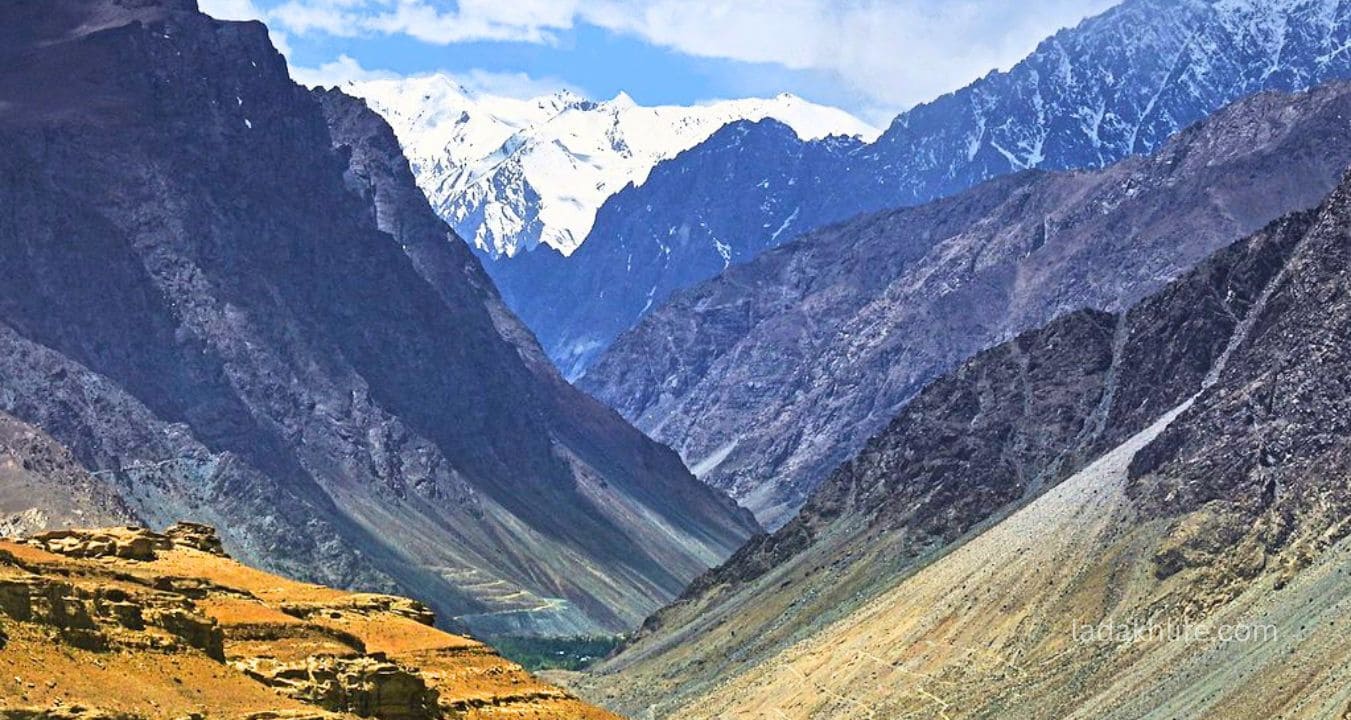
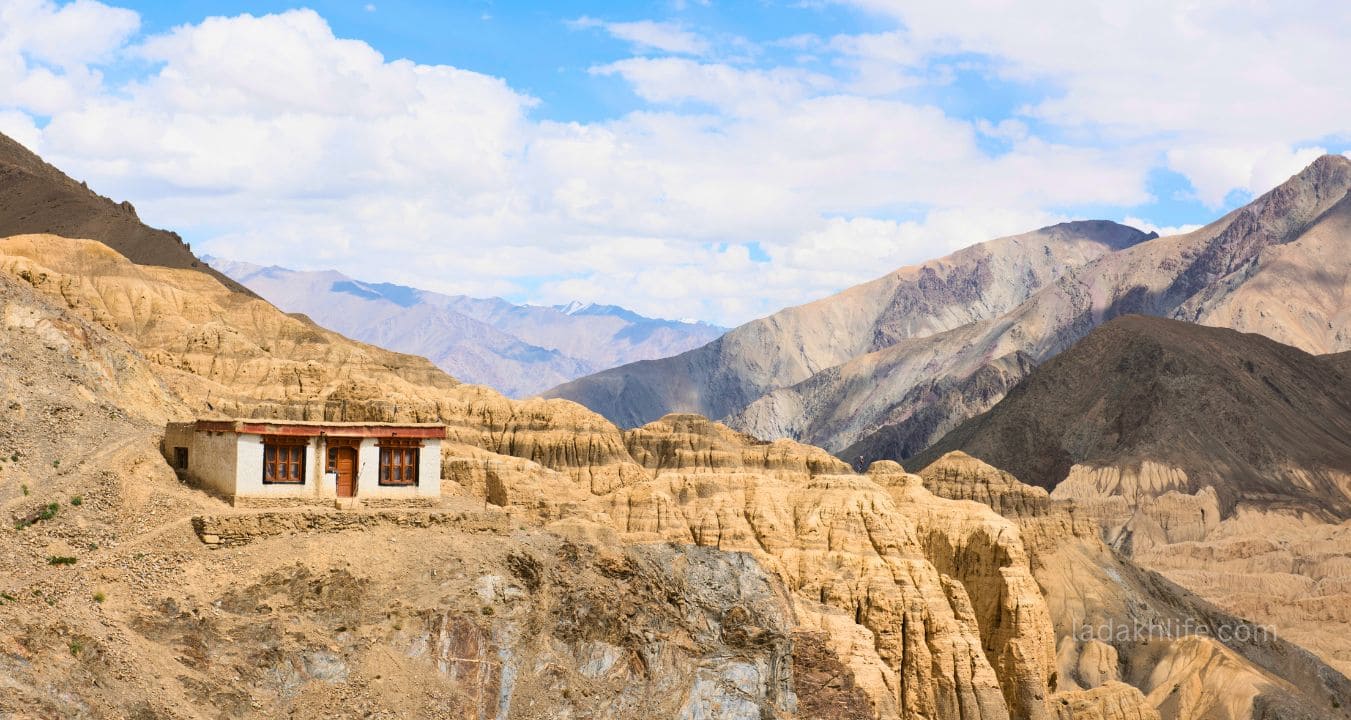
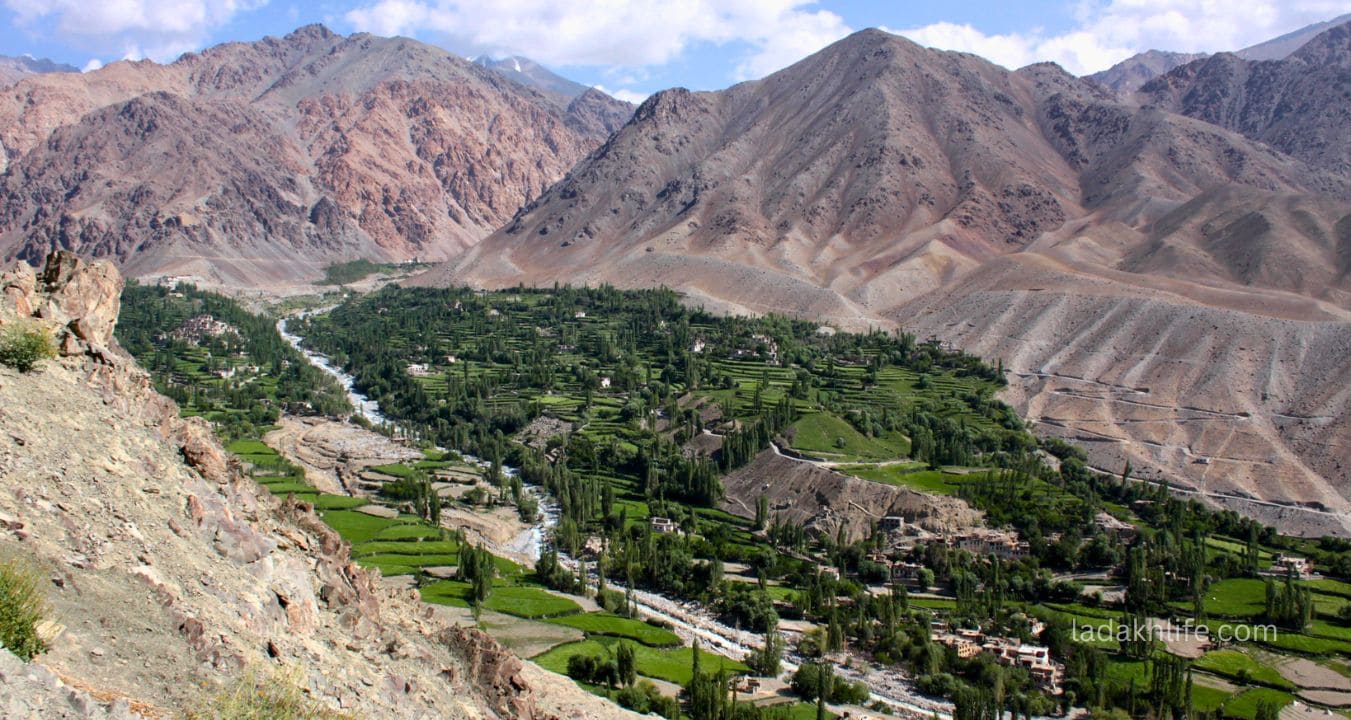
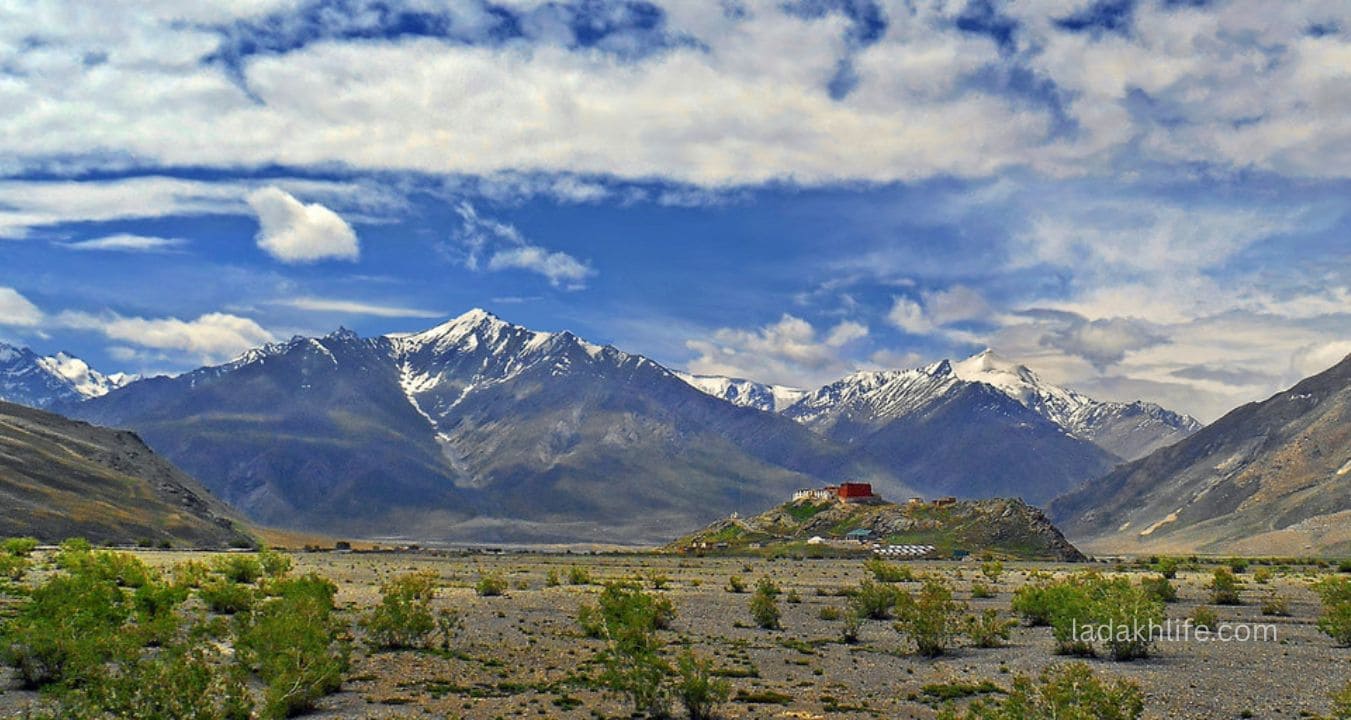
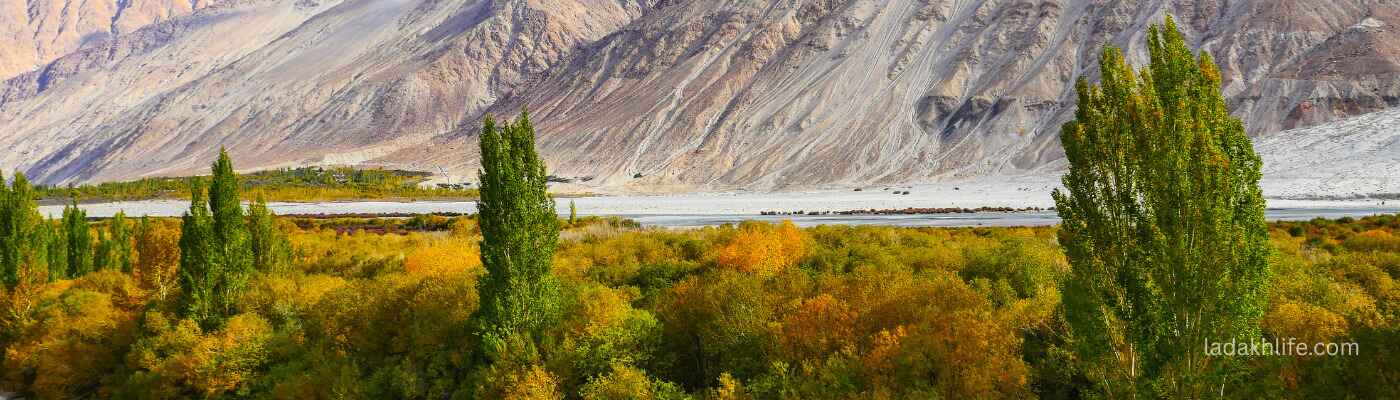
The setting of Dah is spectacular. The village clings to a hillside overlooking a narrow valley. The mountains rise steeply on both sides, their peaks white with snow. The Indus River flows far below. The terraced fields climb up the slopes, green against the brown mountains. It's one of the most beautiful settings you'll find in Sham Valley. Walk to the highest point in the village for the best views. Go at sunset. The light is magic.
Best Time to Visit Dah
Dah is in Sham Valley, which has a longer season than most of Ladakh.
June to September is the main season. July and August are the warmest months, daytime temperatures 20-25°C, nights cool (5-10°C). The apricots are ripe in July-August, and the village is at its most beautiful. August is peak tourist season in Ladakh, but even then, Dah sees only a handful of visitors.
May and October: Shoulder months. May is cooler (15-20°C) and less crowded. Some homestays may still be closed. October is beautiful, clear skies, crisp air, autumn colors, but nights are cold (near freezing). The roads are still open.
November to April: It's cold, winter temperatures drop well below freezing. The roads may be open (Sham Valley stays open longer than Nubra), but homestays may be closed. Not recommended unless you're prepared for extreme cold.
Pro tip: August is the best month for apricots, the village is golden with fruit, and you'll eat the best apricots of your life. September is better for clear skies, crisp air, and fewer tourists (though Dah is never crowded).
Where to Stay Near Dah
Accommodation options near Dah are limited. Here's what's available:
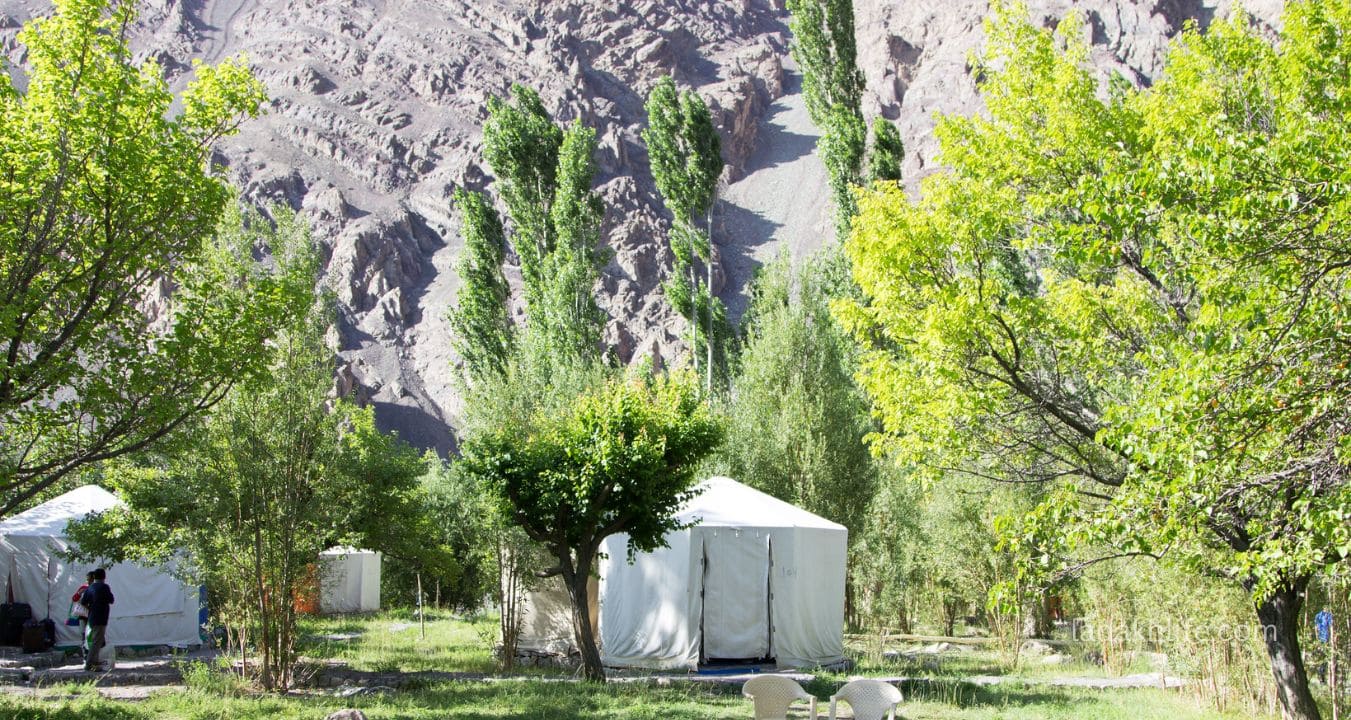
Homestays in Dah (₹500-800 per night): A few Brokpa families offer simple homestay accommodations. Expect basic but clean rooms, shared bathrooms (outside), and home-cooked meals. This is the most authentic way to experience Brokpa culture. Ask around when you arrive, someone will point you to a family with space.
In Kargil (about 40 km southeast): Several hotels and guesthouses. Hotel Barula, Kargil Continental, and Zojila Residency are good options. Kargil is the best base for exploring Dah and Hanu as day trips.
In Leh (about 165 km east): Every budget, but staying in Leh means a long day trip to Dah (3-4 hours each way). Not recommended, stay in Kargil instead.
No hotels in Dah. Embrace the homestay. It's part of the experience.
How to Get to Dah
Dah is in the Sham Valley, off the main Srinagar-Leh highway. Here's how to get there:
Route: Srinagar/Leh → Kargil → turn north toward Dah → Dah village (about 40 km north of Kargil).
From Kargil (about 40 km, 1.5 hours): Drive north from Kargil toward the village of Hanu. The road is narrow and winding, following a small river. It's paved but narrow, drive carefully. The scenery is stunning.
From Leh (about 165 km, 4-5 hours): Drive Leh → Sham Valley (Likir, Basgo, Alchi) → Kargil → Dah. This is a long day's drive. Most travelers break the journey in Kargil overnight.
By bike: Possible, and the ride through Sham Valley is beautiful. The road to Dah is narrow but paved. Watch for livestock on the road, goats, sheep, and sometimes yaks.
By car (any car is fine): The road is paved and well-maintained. No 4x4 needed. Drive carefully on the narrow sections.
By taxi: Hire a taxi from Kargil or Leh. From Kargil, expect to pay ₹2,000-3,000 for a round trip to Dah and Hanu. From Leh, hire a taxi for a 2-day trip to Sham Valley including Dah.
By bus: Buses from Kargil to the nearby villages may get you close to Dah, but you'll need to walk or hitch the last few kilometers. Not recommended, take a taxi instead.
Permits and Border Rules
Dah is not near the border, so permits are generally not required for Indian nationals. However, foreign nationals should check current regulations:
- Indian nationals: No permits needed for Dah. You're free to drive here without an Inner Line Permit.
- Foreign nationals: Some areas near Kargil may require permits, but Dah itself is usually open. Check with a travel agent in Leh or Kargil before traveling.
- Army checkposts: There are checkposts on the road to Dah, but they're mostly checking for suspicious activity, not permits. Stop when signaled, be polite, and you'll be fine.
What to Pack for Dah
Dah is at lower altitude than Leh, so it's warmer. Here's what you need:
- Daytime: T-shirts, light pants, a hat for sun protection, sunglasses. It can be warm in summer (20-25°C).
- Evenings: A fleece or light sweater. The temperature drops at night.
- Shoes: Comfortable walking shoes for exploring the village and hiking to viewpoints.
- Sun protection: Sunscreen (SPF 30+), lip balm, sunglasses. The sun is strong at 10,500 feet.
- Cash: No ATMs in Dah. The nearest ATM is in Kargil (40 km away). Bring enough cash for homestays, food, and any crafts you want to buy.
- Camera: You'll want it. The Brokpa costumes, the village setting, the mountain views, Dah is incredibly photogenic.
- Small gifts/donations: If you take photos of people in traditional dress, offer a small donation (₹50-100) or buy something they've made. It's respectful and supports the community.
Essential Tips for Visiting Dah
- Dress modestly. Dah is a traditional village. Cover your shoulders and knees, especially when visiting homes.
- Ask before taking photos. The Brokpas are generally happy to have their photos taken, but always ask first. A smile and a "Juley" make all the difference. If a woman is wearing her full traditional costume, offer a small donation or buy something she's made.
- Learn a few words. "Juley" (hello/thank you) is understood. A few words of Hindi or Ladakhi go a long way. The older women speak only Brokpa, communication may be through gestures.
- Don't give candy or money to children. It creates bad habits. If you want to help, donate to the local school or buy crafts from the adults.
- Buy local crafts. The handwoven shawls, caps, and belts are beautiful, unique, and reasonably priced. Buying directly from the women supports their families and helps preserve traditional crafts.
- Eat the apricots. They're the best you'll ever taste. Fresh in July-August, dried the rest of the year. Buy a bag of dried apricots to take home.
- Be respectful of the Aryan legend. Whether you believe it or not, it's central to Brokpa identity. Listen respectfully. Don't argue with historians' theories.
- Don't litter. Carry your waste back to Kargil. There's no garbage collection in Dah.
- Stay overnight if you can. Most visitors come as a day trip from Kargil. Stay overnight in a homestay if you can. You'll experience Brokpa hospitality in a way that day-trippers miss.
Dah vs Other Villages in Ladakh
- Dah vs Hanu: Hanu is the other Aryan village, about 5 km from Dah. Hanu is smaller and even quieter. Visit both if you have time. Dah feels slightly more developed; Hanu feels more remote.
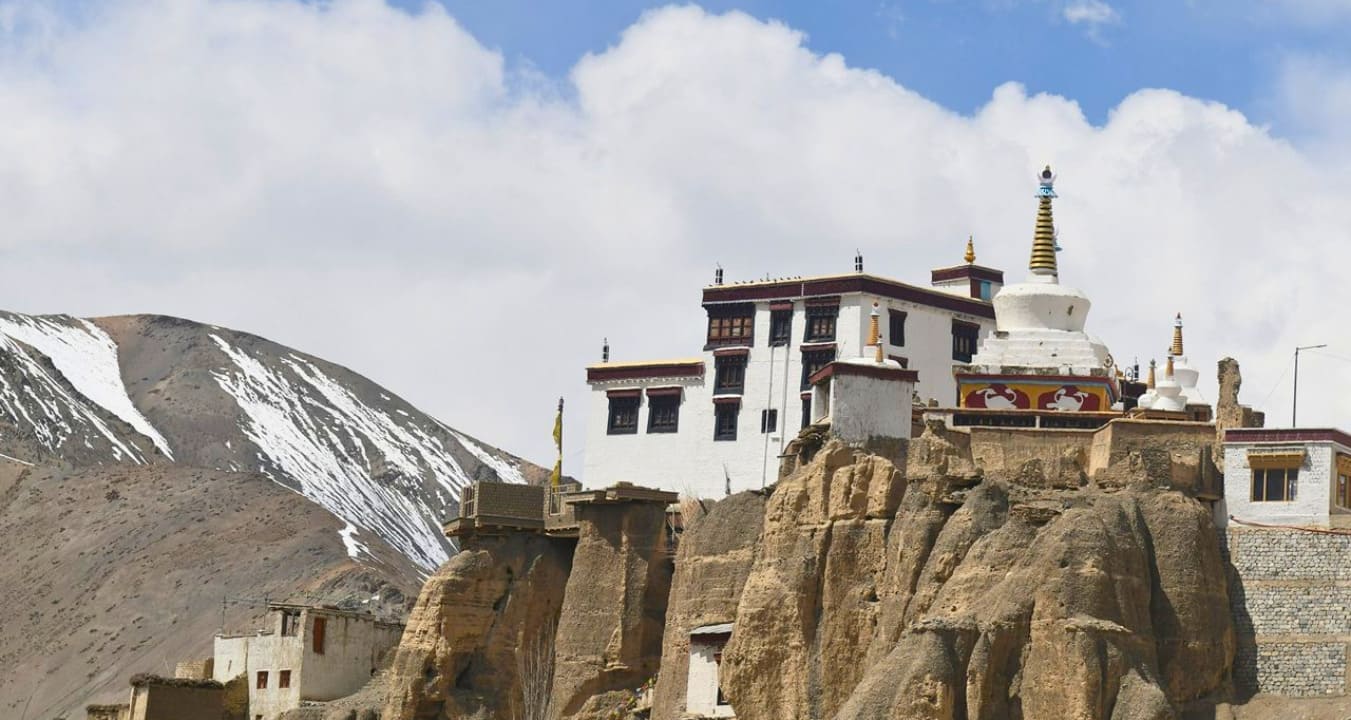
- Dah vs Sham Valley villages (Likir, Basgo, Alchi): Those villages are famous for their Buddhist monasteries and ancient art. Dah is famous for its people, the Brokpa culture. Very different experiences. Do both.
- Dah vs Nubra Valley villages (Diskit, Hunder): Nubra is about sand dunes, camels, and dramatic desert landscapes. Dah is about culture, tradition, and a unique ethnic group. Both are worth visiting, but they're completely different.
- Dah vs Zanskar villages: Zanskar is remote, barren, and Buddhist. Dah is in Sham Valley, greener, more accessible, and culturally unique. Very different worlds.
Why Dah is Ladakh's Best-Kept Secret
Let me be honest. Dah is not famous. It doesn't have a 100-foot Buddha statue or sand dunes or a frozen river trek. It has a few hundred people living in stone houses on a hillside, growing apricots and weaving wool. That's it.
But that's exactly why it's special.
In a world where every beautiful place is being discovered, photographed, and Instagrammed into oblivion, Dah remains quiet. The Brokpas have lived here for thousands of years, long before tourism, long before India and Pakistan, long before Alexander the Great was even born. They have survived invasions, border wars, climate change, and now, the slow creep of modernity. And yet, they still wear their traditional costumes. They still tell the old stories. They still welcome strangers with tea and warmth.
Visiting Dah is not about checking a box. It's about slowing down. Listening to an old woman tell a story in a language you don't understand. Watching the sunlight hit the terraced fields. Eating an apricot so sweet it makes your eyes water. Sitting in a stone courtyard, drinking butter tea, feeling grateful for the moment.
Dah won't give you a photo for Instagram that gets a thousand likes. But it might give you something rarer, a glimpse into a way of life that has survived for millennia, and a reminder that the best things in Ladakh are often the hardest to find.
Dah is not a destination. It's a detour. Drive the extra kilometers. Take the narrow road into the mountains. Find the village of the Brokpas, the Aryan people, the descendants of legends. Sit in their courtyards. Eat their apricots. Listen to their stories. And when you leave, you'll understand why Dah is the best-kept secret in Ladakh. Not because it's famous. Because it's real.